






History of Cusco: Capital of the Inca Empire
Cusco is known as the ancient capital of the Inca Empire and one of the most important destinations in Peru for travelers seeking history, culture, and unforgettable landscapes. Before becoming the center of the Tahuantinsuyo, the region was inhabited by ancient Andean cultures that used fertile valleys and mountains to develop agriculture, rituals, and ceremonial centers. With the consolidation of Inca power, Cusco Peru became the political, administrative, and spiritual heart of the empire.
During the reign of Pachacútec, Cusco was redesigned as a sacred and planned city, with organized streets, monumental temples, ceremonial squares, and a complex hydraulic system. From here, the four suyus (Chinchaysuyo, Antisuyo, Contisuyo, and Collasuyo) were administered, all connected through the impressive road network known as the Qhapaq Ñan. Every corner of the city held deep symbolism within the Andean worldview.
With the arrival of the Spanish in the 16th century, Cusco underwent a profound transformation. Many Inca temples were destroyed or used as foundations for churches and colonial houses. This contrast between perfectly carved stone walls and adobe colonial structures with wooden balconies is one of the city’s greatest charms. Walking through its cobblestone streets today feels like traveling back in time and witnessing how two worlds—Inca and Spanish—merged into one.
Today, a City Tour Cusco is the best way to explore this history in a comfortable and organized manner. In a single tour, you can visit places such as the Plaza de Armas, the Qorikancha (Temple of the Sun), the impressive Sacsayhuamán fortress, and the ceremonial centers of Qenqo, Puka Pukara, and Tambomachay. Each stop helps visitors understand the Inca legacy and the importance of Cusco as the Navel of the World.
Furthermore, Cusco is not only ancient history. The city remains alive thanks to its festivals, traditional markets, handicrafts, local cuisine, and the warmth of its people. For those wondering what to see in Cusco, the answer goes far beyond archaeological ruins—Cusco is a complete destination that blends culture, nature, and authentic experiences everywhere you go.
Cusco’s Location on the Map of Peru
Cusco is located in the southeastern region of Peru, in the heart of the Andes Mountains. It is surrounded by mountains, valleys, and rivers, making it a strategic point for exploring the Sacred Valley of the Incas, the cloud forest, and of course, the famous Inca citadel of Machu Picchu. Thanks to its geographic location, Cusco is the ideal base for connecting with the most important tourist destinations in the southern region of Peru.
Administratively, it is the capital of the Cusco Region and one of the leading tourism hubs in Latin America. Its surroundings offer an impressive variety of landscapes: agricultural terraces, fast-flowing rivers, snow-capped mountains, high-altitude lagoons, and traditional communities. For this reason, many travelers choose to stay several days in the city to combine a City Tour Cusco with excursions to the Sacred Valley, Maras and Moray, the Rainbow Mountain, or the Manu rainforest.
Altitude of Cusco and Adapting to High Elevation
The city of Cusco sits at an altitude of approximately 3,399 meters above sea level. This elevation is one of the factors that most impresses travelers, especially those coming from cities at sea level. For this reason, it is important to consider acclimatization before starting intense hikes or demanding tours.
Upon arrival, it is normal to feel a bit tired or short of breath when climbing stairs or steep streets. To reduce the effects of altitude sickness or “soroche,” it’s recommended to rest during the first few hours, avoid heavy meals, drink plenty of water, and consume traditional infusions like coca or muña tea. Proper acclimatization is essential to fully enjoy your City Tour Cusco and your visits to places like Sacsayhuamán or Rainbow Mountain.
How to Get to Cusco from Different Cities
The fastest and most comfortable way to reach Cusco is by plane. From the city of Lima, the flight lasts about one hour. The Alejandro Velasco Astete International Airport receives daily flights from Lima and other cities such as Arequipa, Juliaca, and Puerto Maldonado. There are also seasonal international connections or routes via other airports, making access easier for travelers from around the world.
Another option is to arrive by land. There are bus routes connecting Cusco with Arequipa, Puno, Abancay, and other cities in southern Peru. Although these trips can be long, they offer impressive Andean landscapes along the way. Many travelers combine their journey with a visit to Lake Titicaca in Puno before continuing to Cusco.
For those looking for a different experience, some segments can be done by train, especially from Ollantaytambo to Machu Picchu. While the train does not go directly to Cusco for regular tourist routes to Machu Picchu, Cusco remains the main starting point and the most important city for organizing all excursions in the region.
Weather in Cusco: What to Expect During Your Visit
The weather in Cusco is typical of the Andean region, with mild days and cold nights. The city has two well-defined seasons: the dry season and the rainy season. Knowing the difference will help you decide the best time to visit Cusco based on your preferences.
- Dry season (May to October): Considered the best season for tourism, with sunny days, clear skies, and very little rain. It is perfect for hikes, outdoor tours, and adventure activities. Nights can be very cold, especially in June and July.
- Rainy season (November to April): During these months, mornings can be partly sunny, but afternoons tend to be rainy. The landscapes become greener, and rivers carry more water. If traveling in this season, it’s important to bring waterproof clothing and proper footwear.
Regardless of the season, warm clothing for the evening, sunscreen for the day, and comfortable shoes are essential. Weather conditions can change quickly, so it’s best to be prepared.
Must-See Places on the City Tour Cusco
The City Tour Cusco includes the main attractions of the city and its surroundings. It is the best option for first-time visitors who want a complete route in just a few hours. Below are some of the most important tourist spots included:
🏛️ Plaza de Armas of Cusco
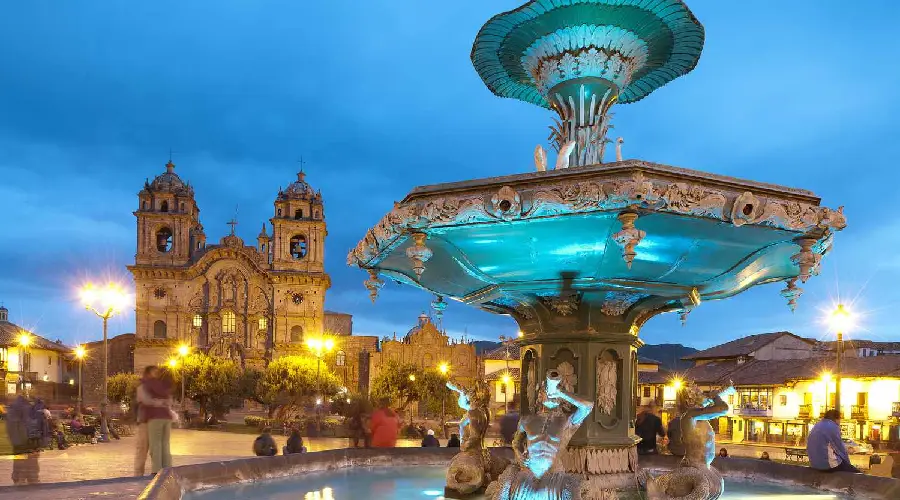
The heart of the historic center. Here you’ll find the Cusco Cathedral and the Church of the Society of Jesus, along with colonial balconies, restaurants, and shops. It’s an excellent starting point for exploring the city on foot.
🏛️ Qorikancha or Temple of the Sun
One of the most sacred temples of the Incas. Its finely carved stone walls served as the base for the construction of the Santo Domingo convent during the colonial era. In Qorikancha, you can still observe Inca architecture and exhibitions on Andean cosmology.
🏛️ Sacsayhuamán
An impressive ceremonial fortress located on the hills overlooking Cusco. Its enormous stone blocks perfectly fitted together continue to amaze experts. It also offers one of the best panoramic views of the city and is the main venue for the Inti Raymi festival.
🏛️ Qenqo, Puka Pukara, and Tambomachay
These archaeological complexes are located in the outskirts of Cusco and are traditionally included in the City Tour. Qenqo stands out for its carved galleries and ceremonial spaces; Puka Pukara is believed to have served as a military checkpoint; and Tambomachay is known as the “Inca Bath” due to its water fountains and finely engineered channels.
Visiting these sites with a specialized guide helps you understand their significance, construction techniques, and sacred symbolism. Therefore, if you are planning what to see in Cusco on your first day, the City Tour Cusco is an excellent option.
Meaning of Cusco: The Navel of the World
The original name of the city is Qosqo, a Quechua word meaning “Navel of the World.” This name reflects the importance Cusco held in the Andean worldview as a center of energy and connection between the gods, nature, and humanity. From here, the paths leading to the four regions of the Tahuantinsuyo extended outward.
For the Incas, Cusco was not only an administrative city but also a sacred place filled with temples, huacas, palaces, and ceremonial sites. Many travelers still feel the city’s unique energy while walking along its streets and observing its ancient stone walls.
Legends of Cusco and Its Mythical Origin
Cusco’s history is intertwined with legends explaining its sacred origin. One of the most famous is the story of Manco Cápac and Mama Ocllo, who, according to tradition, were sent by the Sun God (Inti) to civilize the Andean peoples. They emerged from Lake Titicaca with a golden staff and were instructed to found a city where it would sink easily into the ground. That place was Cusco.
Another important legend is that of the Ayar Brothers. In this version, four brothers and their wives began a long journey from the cave of Pacaritambo to find a place to establish a great kingdom. After overcoming several challenges, only Ayar Manco reached the chosen location, where he founded Cusco and became the first great Inca leader.
These stories show that Cusco is not just a geographical point but a symbolic space full of myth and spirituality. Knowing its legends enriches your experience when visiting temples, plazas, and archaeological sites.
Tips for Your City Tour Cusco and First Days in the City
Best Time to Visit Cusco
In general, the best time to visit Cusco is between May and October, during the dry season. These months offer sunnier days, clear skies, and lower chances of rain—perfect for outdoor tours, hiking, trekking, and photography. In June, the famous Inti Raymi festival is celebrated, one of the most spectacular events in the Andean calendar.
However, traveling during the rainy season also has its advantages: greener landscapes, fewer tourists, and sometimes better prices on accommodation and services. Regardless of when you visit, planning your City Tour Cusco in advance and bringing the right clothing will ensure a great experience.
Recommended Tours in Cusco
If you’re planning your trip and don’t know where to start, a great idea is to dedicate the first day to the City Tour Cusco to get to know the city and acclimatize. After that, you can combine tours to the Sacred Valley, Machu Picchu, the Rainbow Mountain, or nearby lagoons. Cusco is the perfect starting point for designing personalized adventures.
Explore Cusco with our best tours and enjoy a complete experience:
[tours_carrusel]