






History and Meaning of the Intihuatana
How to Reach the Intihuatana?
Nearby Attractions
Tips for Your Visit
Conclusion
Located in the upper part of the citadel, this carved stone monolith has sparked the interest of archaeologists, tourists, and scholars for generations. In this article, you’ll discover how to visit the Intihuatana of Machu Picchu, understand its spiritual and scientific function, and appreciate its beauty in its natural Andean environment. learn more ->
History and Meaning of the Intihuatana
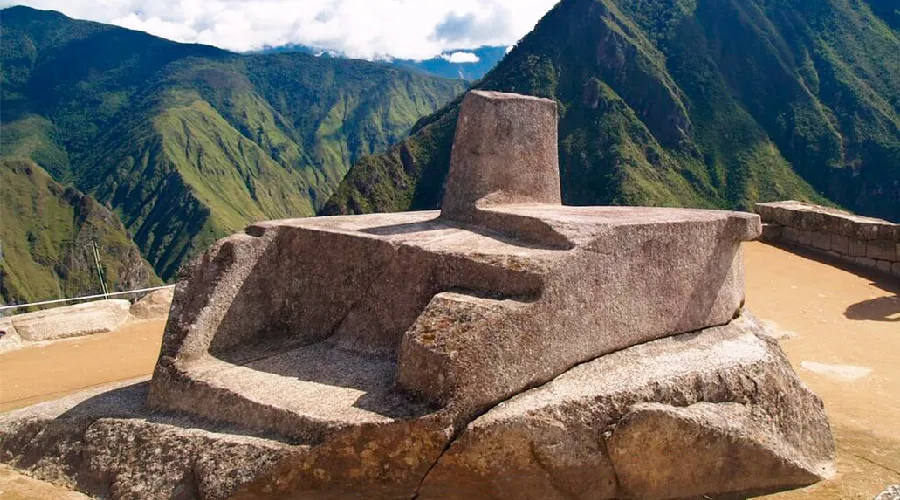
The Intihuatana was designed by the Incas to mark key astronomical events such as solstices. Thanks to its precise orientation, it casts shadows that helped define the agricultural calendar. Its trapezoidal shape, carved from a single rock, is aligned with the cardinal points.
For the Incas, this instrument was not only a scientific tool but also a spiritual one: a way to keep the sun «tied» during the winter solstice and ensure its return. It was one of the few intihuatanas that was not destroyed by the conquistadors, which makes it even more valuable.
How to Reach the Intihuatana?
The Intihuatana is located within the archaeological site of Machu Picchu, in the upper part of the religious sector. To get there:
- Book your entry in advance: Accessing the Intihuatana requires a Machu Picchu entrance ticket with an official guide.
- Climb the internal staircases: Access involves a slight uphill walk from the Sacred Plaza.
- Follow the signs: The route is signposted, and access is orderly to preserve the site.
- Consult with your guide: Some schedules may restrict close access, so your guide will know when to visit it.
Nearby Attractions
Near the Intihuatana you can explore other key places in Machu Picchu:
- Temple of the Sun: One of the most sacred spaces, used in solar and funeral rituals.
- Sacred Rock: Monument in the form of a carved mountain, linked to the worship of the Apus.
- Temple of the Three Windows: Representation of the Inca tripartite world (Hanan Pacha, Kay Pacha, and Ukhu Pacha).
- Guardian’s House: Offers the most iconic view of Machu Picchu and is ideal for photographs.
Tips for Your Visit
- Arrive early: The best views and least crowds are found between 6:00 and 8:00 a.m.
- Don’t touch the stone: Although tempting, it’s important to preserve it intact.
- Bring water and sunscreen: The hike to the Intihuatana is demanding and exposed to the sun.
- Respect the environment: Don’t climb on walls or stray from marked paths.
- Enjoy it in silence: It’s a place of contemplation and spiritual connection.
Conclusion
The Intihuatana of Machu Picchu is a jewel of Inca thought, a fusion of science, religion, and nature. Visiting it is a unique opportunity to approach the Andean world from its original worldview.
You’ll not only be standing before an architectural marvel but also before a millennial symbol that still transmits ancestral wisdom.
Make sure to include the Intihuatana in your itinerary and experience one of the most spiritual corners of Peru.
[tours_carrusel]