






Q’eswachaka: The Last Inca Suspension Bridge
Symbolism of the Andean Ritual
In the Andean worldview, the act of renewal is part of life’s natural cycle. Much like planting and harvesting, the Q’eswachaka bridge is rebuilt annually. This not only ensures safe crossing but also strengthens the connection between the people and their cultural heritage.
The Quechua-speaking communities of Huinchiri, Chaupibanda, Choccayhua, and Ccollana Quehue lead this ancient custom, engaging in a «minka» — a form of communal labor that dates back to the days of the Inca Empire.
How the Q’eswachaka Bridge Is Made
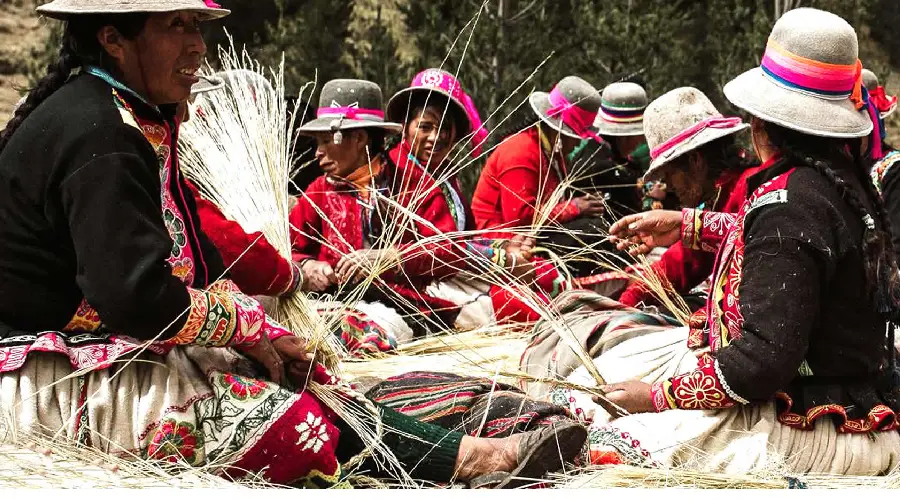
The reconstruction starts with harvesting qoya ichu, a strong native grass that is twisted into thick ropes known as queswas. These form the foundation of the bridge. Lighter cords become the handrails, while the thicker ones serve as the main floor structure.
The ends are fastened to stone abutments, and the walkway is covered with branches to improve stability. The entire process is supervised by master bridge weavers, whose knowledge is passed down through generations. The event concludes with a ritual speech, followed by traditional dances, feasts, and offerings to Pachamama, the Earth Mother.

The Qhapaq Ñan and Its Legacy
The Qhapaq Ñan was the grand road network of the Tahuantinsuyo, linking the Andes with the coast and the Amazon. To overcome rivers and deep canyons, the Incas constructed bridges from stone, wood, or plant fibers. Q’eswachaka remains the only surviving Inca bridge still built using original techniques.
Beyond its functionality, this bridge is a link between ancient and modern times, uniting past traditions with present-day identity. Every rebuilding is a living lesson in culture, community collaboration, and spiritual continuity.
Sustainable Tourism in Quehue
Today, Q’eswachaka draws visitors from around the globe to Quehue District in the Canas Province. This cultural attraction promotes responsible tourism and boosts the local economy by creating jobs and preserving ancestral customs.
Tourists enjoy a genuine cultural encounter, witnessing firsthand the union of tradition, spirituality, and craftsmanship. It’s a chance to admire the ingenuity of ancient Peruvians and understand how their heritage is kept alive today.
Spiritual Significance and Andean Cosmology
Q’eswachaka is more than a physical structure — it is a sacred space. Its reconstruction is accompanied by rituals, chants, and offerings to the Apus (the mountain spirits), reinforcing the Andean philosophy of harmony between humans and nature.
Thus, this bridge becomes a symbol of deep connection: it unites not only regions but also eras and values. It stands as a testament to the cultural resilience of the Andean people and the enduring power of unity to sustain a millennia-old legacy.
A Transformative Journey
Visiting Q’eswachaka Bridge is more than just sightseeing — it’s a dive into a living tradition, offering lessons in history, culture, and humanity. Each strand woven into the bridge is an act of resistance, a story preserved by skilled hands determined to keep their legacy alive.
This journey to the heart of the Peruvian Andes invites reflection on what truly matters: solidarity, memory, and reverence for the Earth. Without a doubt, Q’eswachaka is a pathway to the spiritual soul of Peru.