






Located near the Plaza de Armas and Qorikancha, the Qosqo Center for Native Art offers regular performances in an auditorium designed to highlight every detail: the footwork, the melodies of quenas and charangos, and the colorful costumes of polleras, monteras, and masks. For visitors, attending a presentation is a chance to understand Andean culture beyond ruins and museums. It is the continuity of a memory that sings, dances, and reinvents itself.
This guide —SEO-optimized— presents the history of the ensemble, its cultural importance, an overview of its repertoire and costumes, architectural features, the visitor experience, and practical tips to plan your visit to the Qosqo Center for Native Art.
History of the Museum
The Qosqo Center for Native Art was born in the early 20th century, when local researchers, musicians, and dancers realized that many ritual dances were at risk of disappearing due to migration and social changes. To protect this heritage, they collected choreographies, music, lyrics, and costumes, passing them to new generations with discipline and respect for their origins.
For almost a century, the Qosqo Center for Native Art has built stable ensembles, established workshops, created archives of scores and photographs, and developed a repertoire now considered a reference in Peru and abroad. Its story reflects Cusco’s pride in its roots and its dedication to preserving living traditions.
The center works directly with communities, documents variations, and respects agricultural and religious calendars so that each dance keeps its meaning, even on stage. This commitment makes it both guardian and promoter of Cusco’s folklore.
Cultural and Heritage Importance
The Qosqo Center for Native Art plays a vital role in Cusco’s cultural life because it:
- Safeguards intangible heritage: researching and teaching dances, music, and costumes while respecting community traditions.
- Provides artistic training: with schools and rehearsals for children, youth, and adults, offering technical and cultural knowledge.
- Maintains a living stage: creating opportunities for audiences to enjoy authentic folklore with quality performance.
- Strengthens identity: communities see their dances on stage, which reinforces cultural pride and motivates younger generations.
- Promotes responsible tourism: offering authentic experiences beyond archaeological ruins and conventional museums.
- Supports the creative economy: through costume production, instrument making, and technical services like sound and lighting.
Visiting the Qosqo Center for Native Art demonstrates that folklore is not a relic of the past, but a living art where memory and creativity merge.

Collections and Exhibitions
Although not a museum, the Qosqo Center for Native Art displays a “living collection” in every performance: authentic costumes, instruments, and masks. Highlights include:
- Agricultural dances: celebrating sowing, harvest, and rituals of gratitude to Pachamama.
- Carnival dances: festive choreographies full of color, music, and humor.
- Highland and valley dances: showcasing distinct rhythms, costumes, and steps.
- Courtship dances: playful interactions of romance and humor.
- Masked dances: satirical characters and ritual figures that reflect social commentary.
Costume collections include:
- Monteras and hats: decorated with beads, pompoms, and mirrors that mark identity.
- Polleras and llicllas: colorful woven skirts and shawls with traditional patterns.
- Masks: carved wood or leather pieces with vibrant painting.
- Instruments: quenas, pan flutes, charangos, and drums, built by local artisans.
Each performance is a live exhibition where costumes, music, and movement combine, offering visitors a unique look into Andean culture.
Architecture and Design
The auditorium of the Qosqo Center for Native Art was designed for visibility and acoustics. Seats are arranged for clear views, lighting enhances costumes without glare, and sound captures every melody and rhythm.
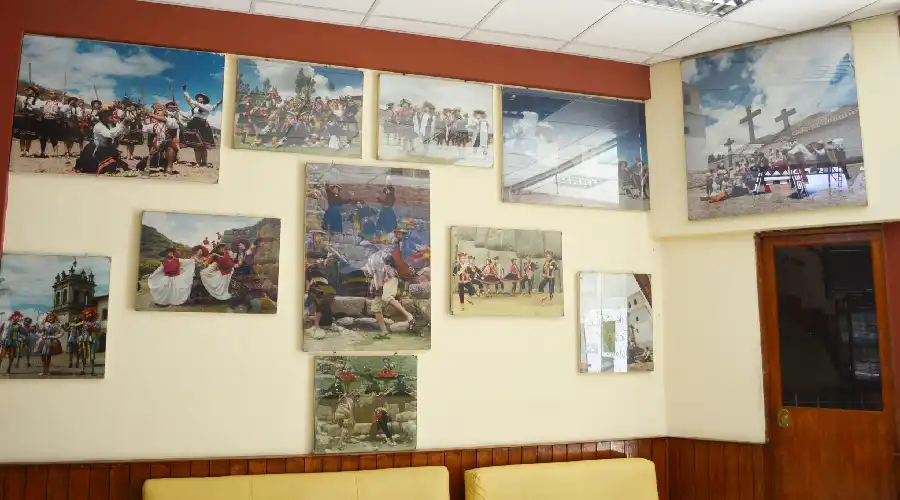
Backstage, there are dressing rooms and conservation spaces where costumes are maintained. The entrance hall often hosts small exhibitions of instruments, textiles, or historic photos, making each visit more enriching.
Visitor Experience
A performance at the Qosqo Center for Native Art lasts between 60 and 90 minutes and typically includes:
- Arrival: check the program to learn about dances and timing.
- Opening music: traditional instruments set the tone for the evening.
- Thematic blocks: groups of dances based on themes like agriculture, carnival, or courtship.
- Costume observation: details in embroidery and accessories reveal origin and meaning.
- Closing: the ensemble thanks the audience and sometimes interacts with visitors.
Photography is allowed under specific rules: no flash and no blocking aisles. Families will find the shows engaging for children, with lively music and bright costumes. For researchers, it is a living laboratory where rhythms and choreography can be studied.

Tips for Visiting
Organize your visit to the Qosqo Center for Native Art with these tips:
- Tickets: book in advance, especially during high season.
- Arrival time: get there early to choose your seat and review the program.
- Seating: middle rows for costume details, higher seats for formations.
- Photography: follow staff guidelines to respect performers.
- Climate: bring a light jacket; nights in Cusco can be cool.
- Shopping: prefer souvenirs made by identified artisans to support local economy.
- Combined tours: pair the visit with Qorikancha or Avenida El Sol.
- For families: ask for short guides to make the experience more engaging for children.
- Respect: remember that dances come from living communities; applaud at the end of each performance.
- Accessibility: check barrier-free routes if needed.
Conclusion
The Qosqo Center for Native Art is an essential cultural destination in Cusco. On its stage, music, dance, costumes, and humor combine to create a vibrant experience. Its daily work in research, teaching, and rehearsals ensures that folklore remains alive and relevant.
Include the Qosqo Center for Native Art in your itinerary to complement archaeology, gastronomy, and cultural life. You will leave with music in your ears, colors in your memory, and a deeper understanding of Andean heritage.
[tours_carrusel]