






Corpus Christi: A Living Tradition of Faith and Culture in Cusco
Every June, the city of Cusco fills with devotion, music, color, and tradition for the celebration of Corpus Christi. This festivity, one of the most important on Peru’s religious and cultural calendar, is a living testament to the blend between Catholic faith and Andean beliefs. During this time, thousands of worshippers, tourists, and local communities gather in the Plaza de Armas to honor the Holy Sacrament and the sacred images of Cusco’s patron saints.
Corpus Christi in Cusco is not just a liturgical event—it is a living expression of collective identity. It is a unique opportunity to witness the power of tradition, where spirituality manifests through dance, chants, processions, and typical cuisine. If you’re looking for an authentic Andean experience, this celebration is unmissable.
Origin of Corpus Christi in Cusco
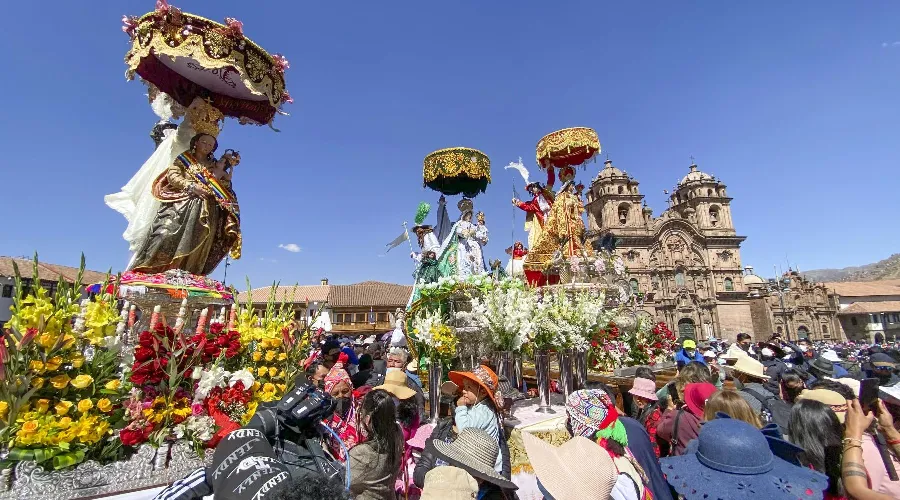
The Corpus Christi celebration was introduced by the Spanish in the 16th century as part of their evangelization program. In the Catholic world, this festivity honors the real presence of Christ in the Eucharist. However, in Cusco, the date took on a unique character: the Andean peoples reinterpreted Corpus Christi through their own worldview, incorporating elements from ancient rituals in honor of the Apus (mountain spirits) and Incan deities.
The result was a hybrid festivity, where Christian sacredness coexists with Andean sacredness. Over the centuries, Corpus Christi in Cusco has become a symbol of Peru’s cultural fusion—a space where history, religion, and art blend without losing authenticity.
The Procession of the Patron Saints
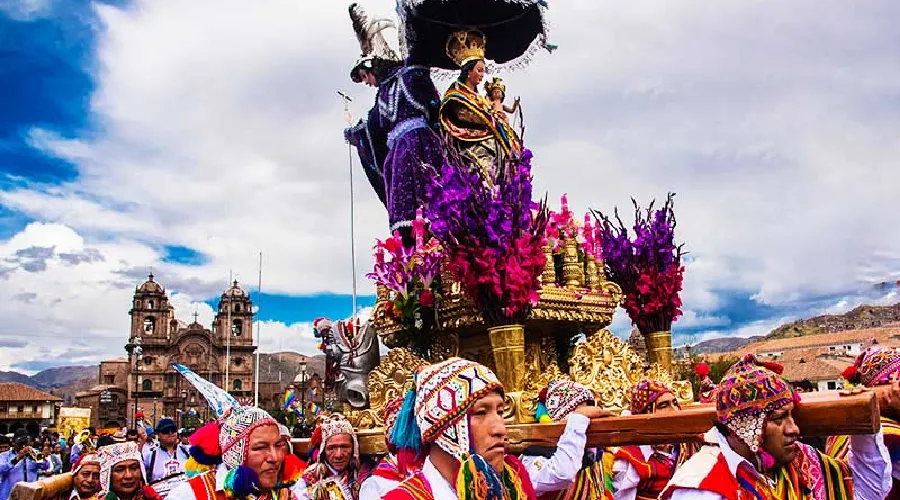
The main event of Corpus Christi in Cusco is the grand procession of 15 religious images representing the patron saints of the city’s districts and parishes. Each image is carried on the shoulders of devotees from its church to Cusco Cathedral, where they remain for eight days. Key participants include the parishes of San Sebastián, San Jerónimo, San Blas, San Cristóbal, the Virgin of Belén, and the Virgin of los Remedios.
The Corpus vigil is a celebration in itself: neighborhoods fill with music, dancing, banners, and fireworks. On the day of the procession, the Plaza de Armas becomes a sea of faithful and tourists who watch with emotion as the images pass solemnly, accompanied by music bands, carguyoc (organizers), dancers, and alféreces who guard the image with devotion.
The emergence of the Holy Sacrament, surrounded by incense and chants, is the most anticipated moment. This act symbolizes the blessing over the city and reaffirms Cusco’s collective faith.
Chiriuchu: The Flavor of Corpus Christi
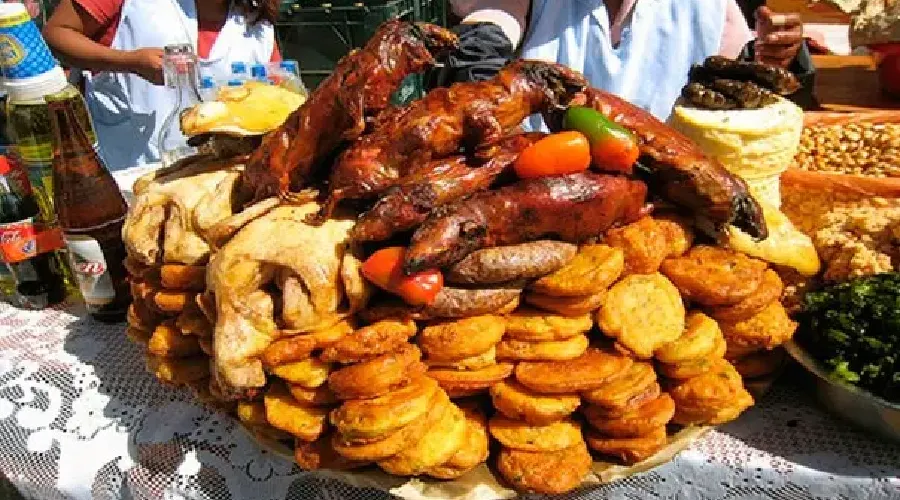
During Corpus Christi, the traditional dish par excellence is chiriuchu, an Andean delicacy that reflects Cusco’s rich culinary heritage. The name comes from Quechua and means “cold food” because it is served at room temperature. This dish combines ingredients from different regions of Peru and is presented as a symbolic offering of national unity.
Its ingredients include roasted guinea pig, boiled chicken, fresh cheese, chorizo sausage, corn fritters, toasted corn (cancha), cochayuyo (seaweed), boiled egg, torreja bread, and rocoto pepper. Food stalls are set up around the Cathedral, San Pedro Market, and several streets of the historic center, where diners enjoy the meal in a festive atmosphere.
Eating chiriuchu during Corpus Christi is a way to immerse yourself in tradition and celebrate with the people of Cusco through their cuisine.
Traditions and Cultural Expressions
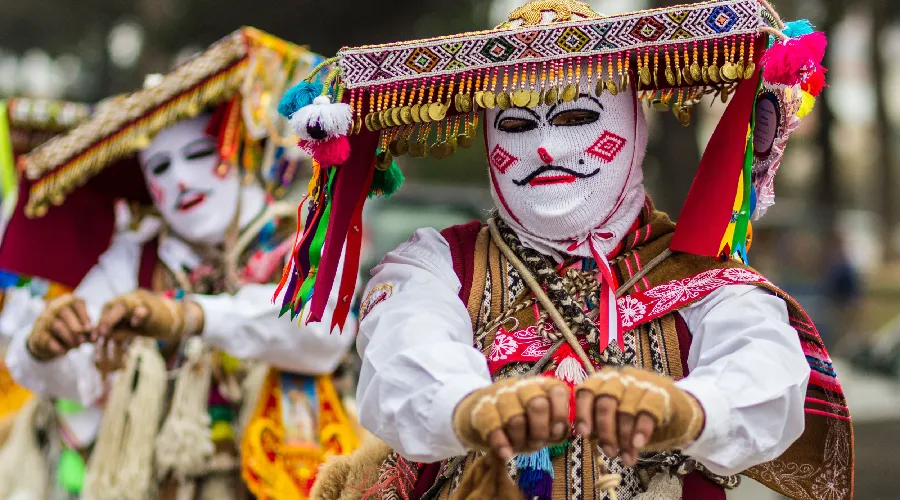
Beyond the procession and food, Corpus Christi in Cusco manifests through various cultural expressions. Traditional dances such as the contradanza, qhapaq qolla, and negrillos fill the streets with color, rhythm, and ancestral meaning. The handmade embroidered costumes reflect the history and worldview of participating communities.
Music bands accompany each saint with huaynos, marineras, and religious marches. It is common to see both children and adults actively participating, showing that this tradition is not just inherited—it is proudly lived.
During the eight days of celebration, many families organize prayers, novenas, and gatherings in honor of their patron saint. The entire city pauses to pay tribute to its faith and celebrate its cultural identity.
Tourism and Participation in Corpus Christi
Corpus Christi is one of the most recommended dates to visit Cusco. Thousands of tourists arrive drawn by this authentic and profound experience. Unlike other more commercial festivities, Corpus retains its communal and spiritual essence, making it an unmissable event for cultural travelers.
HAHA TRIPS offers guided tours during the festivity, including visits to colonial churches, ceremonial spaces, chiriuchu tastings, and participation in local activities. It is also a great opportunity to buy crafts, traditional textiles, and learn firsthand about Cusco’s folk art.
To fully enjoy Corpus Christi, it is recommended to arrive early at the Plaza de Armas, wear comfortable clothing, bring a camera, and above all, show deep respect for the local culture.
Conclusion
Corpus Christi in Cusco is much more than a religious celebration—it is an expression of identity, a bridge between the ancestral and the contemporary, and a testament to the Andean soul that lives in every image, dance, and musical note. Participating in this festivity means immersing yourself in centuries of history, devotion, and living creativity.
For those seeking to understand the true essence of Cusco and the deep Peru, Corpus Christi is the perfect time. You won’t just witness a procession—you will feel the strength of a tradition that is more alive than ever.