


February in Cusco: Tradition, Joy and Devotion
The February festivals in Cusco are marked by a strong spiritual, social and cultural presence. This month becomes a bridge between religious devotions and pagan celebrations that are part of the traditional Andean calendar.
The celebrations begin with solemn religious acts such as the Virgin of Candelaria and transform into popular festivities like the Cusco Carnival, filled with color, music, dances and typical dishes. The month also highlights the traditional Andean duality expressed in the compadres and comadres festivals, representing male and female roles within society.
Throughout the month, the city of Cusco and its districts dress up to welcome local and foreign visitors, who actively participate in dances, processions, craft fairs and gastronomic contests. Each festivity is an opportunity to relive the past and strengthen community ties. Without a doubt, the February festivals are one of the most significant cultural attractions of the Cusco calendar.
Virgin of Candelaria
The Virgin of Candelaria festivity, celebrated on February 2, is one of the most important in the Andean world. In Cusco, although it does not reach the magnitude of the celebration in Puno, devotion to this Marian figure is enthusiastically expressed in districts such as San Jerónimo, Santiago, Saylla and Huaro.
Religious activities begin with novenas and masses, followed by processions with the image of the Virgin, adorned with candles and flowers. Folkloric groups perform dances such as sikuris, caporales and morenadas, reflecting the fusion of the religious and the festive. Communities showcase their best costumes and organize communal lunches where tamal, chiriuchu and guinea pig are the stars.
Saint Andrew (Anta)
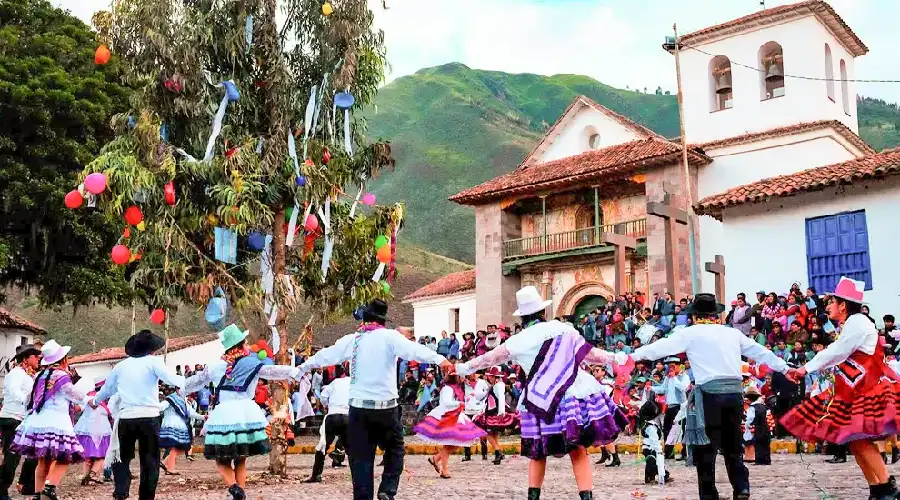
Every February 4, the district of Anta, located a few kilometers from Cusco, celebrates Saint Andrew, its patron saint. This festivity combines Catholic tradition with native cultural elements and becomes a significant event for rural communities in the area.
On this date, agricultural fairs, traditional dance competitions, food fairs and music festivals are held. Traditional dances such as capac chuncho, contradanza and qhapaq negro are performed masterfully by local youth, accompanied by local bands.
The image of the saint is carried in procession through the main streets, while the faithful express gratitude and petitions. Music and dance last for days, generating an atmosphere of unity and cultural identity that enriches the February festivals in this part of Cusco.
Saint Blaise Festival
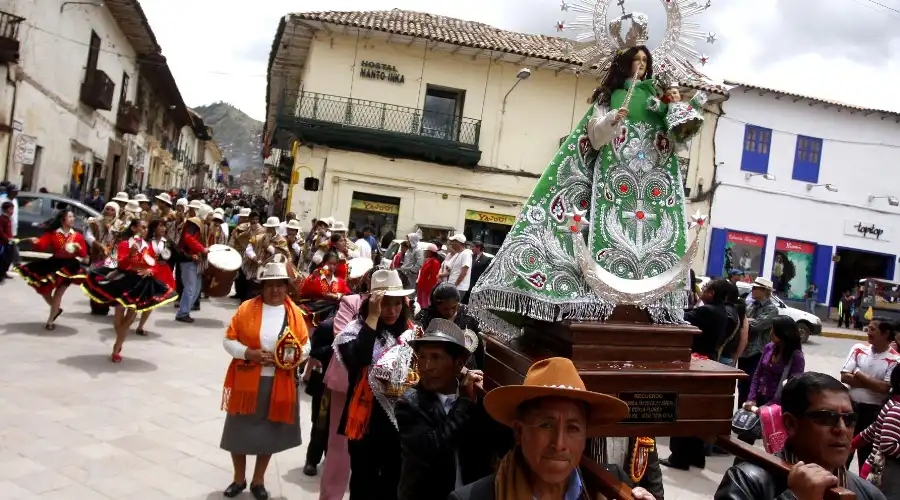
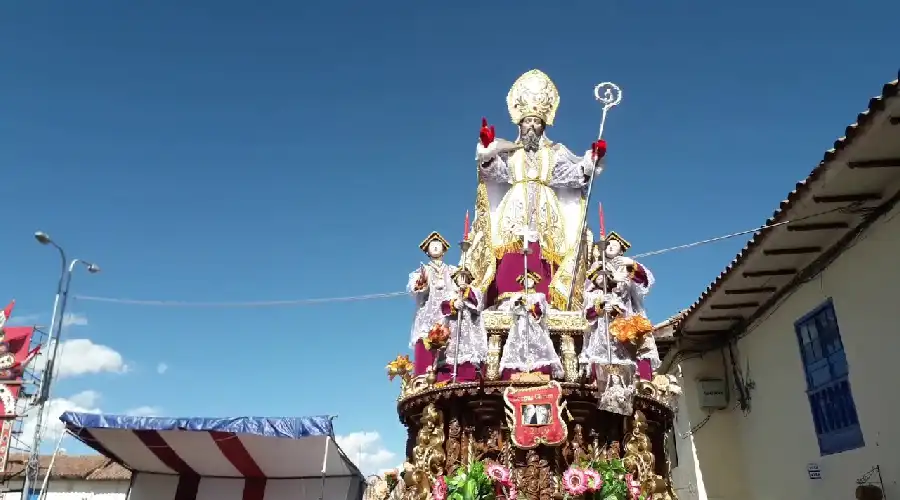
On February 10, the Saint Blaise Festival is commemorated in the historic artisan neighborhood of the same name. This celebration is especially significant for Cusco artisans, who recognize Saint Blaise as their patron.
The festivity includes a solemn mass, a procession with the saint’s image through the cobbled streets of the neighborhood and a craft fair displaying handmade products such as textiles, jewelry, ceramics, wood carving and painting. It is an excellent opportunity to support local art and acquire authentic pieces directly from the creators.
San Blas square becomes a cultural meeting point where typical food such as chicha de jora, anticucho and chicharrón can be tasted while enjoying dances like qollas and chunchos. All of this adds to the richness of the February festivals in Cusco.
Compadres Festival
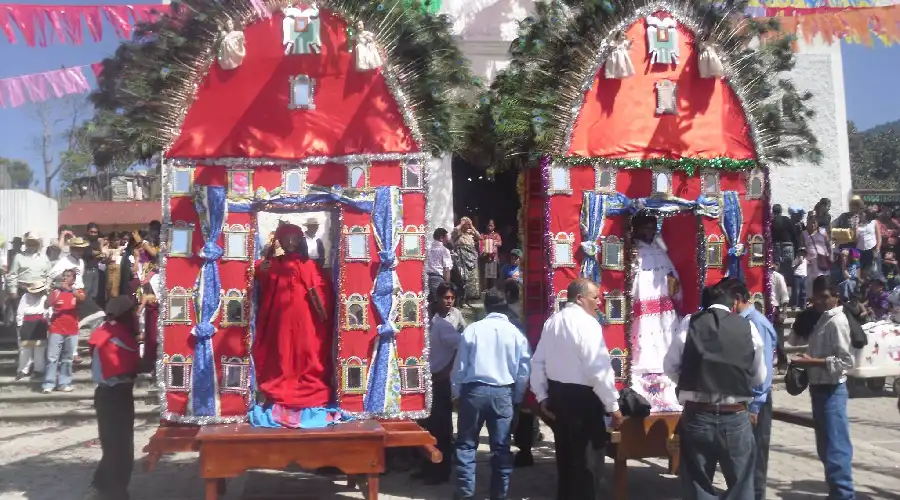
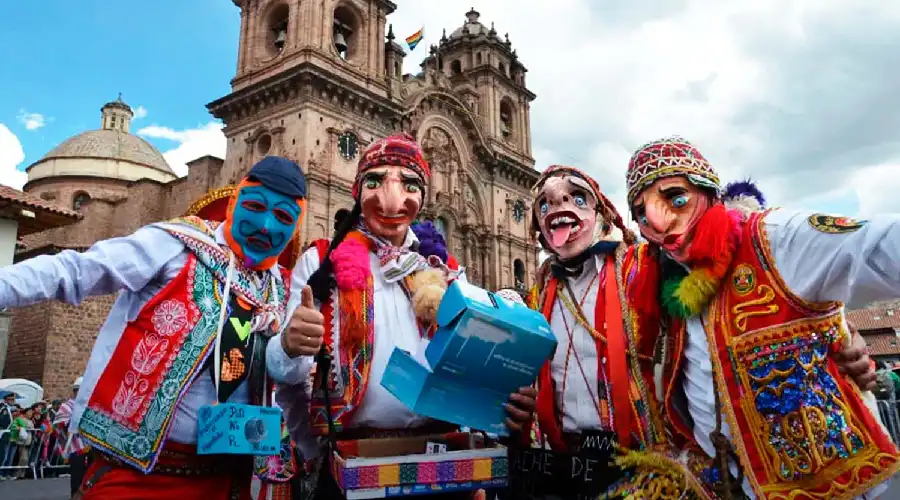
The Compadres Festival is celebrated on the Thursday before Carnival Sunday and is a unique expression of Cusco’s identity. This festivity, based on godparent ties, pays tribute to male friendship and strengthens the relationships between godparents and godchildren.
Compadres exchange symbolic gifts such as dolls made of cardboard, wood or cloth that represent comic scenes or social criticism. Communal lunches, dance contests and parades are also organized. The squares of the historic center are filled with laughter and games.
This celebration is an opportunity to reaffirm social bonds but also to express creativity, humor and social critique through the dolls and representations circulating that day. Undoubtedly, one of the most picturesque expressions of the February festivals.
Valentine’s Day
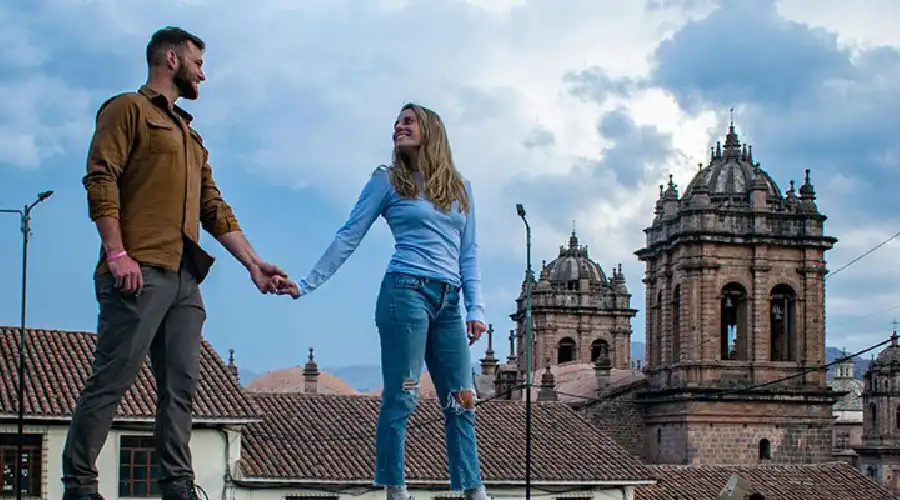
On February 14, Valentine’s Day is celebrated, a modern festivity adopted by Cusco’s culture. On this date, couples celebrate love with romantic dinners, getaways to tourist spots or visits to hot springs and viewpoints.
Cusco offers a magical atmosphere for this day: the colonial lights of the Plaza de Armas, the cobbled streets of San Blas and the landscapes of the Sacred Valley create ideal settings to celebrate love. Restaurants offer special menus, hotels provide couple promotions and agencies organize romantic tours.
Although it is not a traditional festivity, it has gained strength among young people and has been integrated into Cusco’s February celebrations, becoming part of the February festivals with a more contemporary focus.
Comadres Festival
One week after Compadres, the Comadres Festival is celebrated. This event has a female focus and celebrates bonds of friendship, kinship and solidarity among women. It is one of the most anticipated festivities in Cusco’s neighborhoods, especially for its joy, playfulness and symbolism.
Comadres prepare dolls decorated with traditional costumes or humorous outfits, often accompanied by witty phrases. Streets fill with female parades, lunches, foam games and traditional music.
The festivity becomes a space to pay tribute to the role of women in Andean society and to reaffirm community and family bonds, especially in rural areas of Cusco. A celebration that gives even more life to the February festivals.
Cusco Carnival
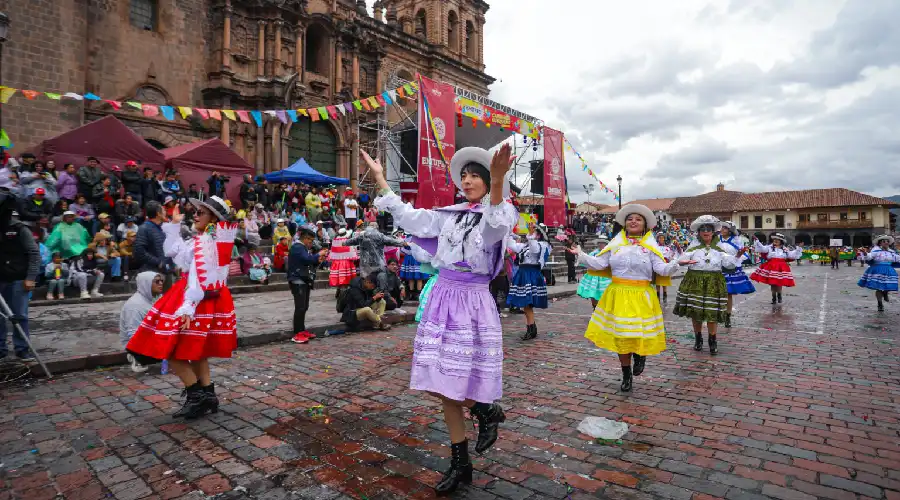
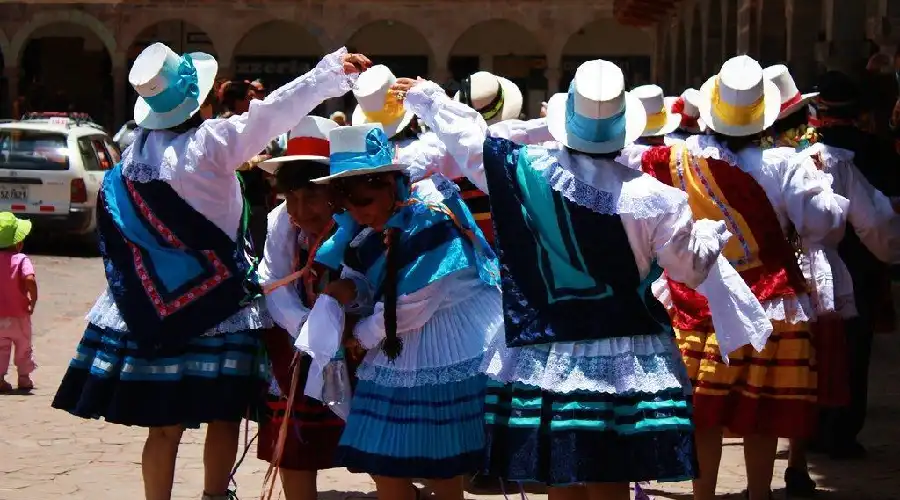
The Cusco Carnival is the most awaited celebration of February. Although its date varies each year, it usually coincides with the third Sunday of the month. This festivity represents the fusion between pre-Hispanic traditions and Christian influence, being a true spectacle of color and tradition.
Parades roam the streets of the historic center to the rhythm of huaynos and Cusco carnival songs. Dance groups wearing traditional costumes representing various communities participate, accompanied by live musicians. During the day, friendly battles with water, foam, talc and paint are common.
Gastronomy is also a protagonist with dishes such as timpu or puchero, which combines meat, potato, cassava, peach, chickpea, rice and cabbage leaves. Families gather around this traditional dish to share and celebrate.
The Carnival also includes dance troupe competitions, school parades and activities in neighborhoods such as San Sebastián, San Jerónimo and Santiago. It is undoubtedly one of Cusco’s most vibrant cultural manifestations and the ideal culmination of the February festivals.