Introduction
Qoricancha, known as the “Temple of the Sun,” was the most sacred and powerful temple of the Tahuantinsuyo. This religious complex, located in the heart of Cusco, represents the pinnacle of spiritual, astronomical, and architectural thought of the Inca civilization. It was the epicenter of the Andean worldview, radiating power, energy, and connection to the gods. In essence, Qoricancha was the Spiritual Center of the Inca Empire.
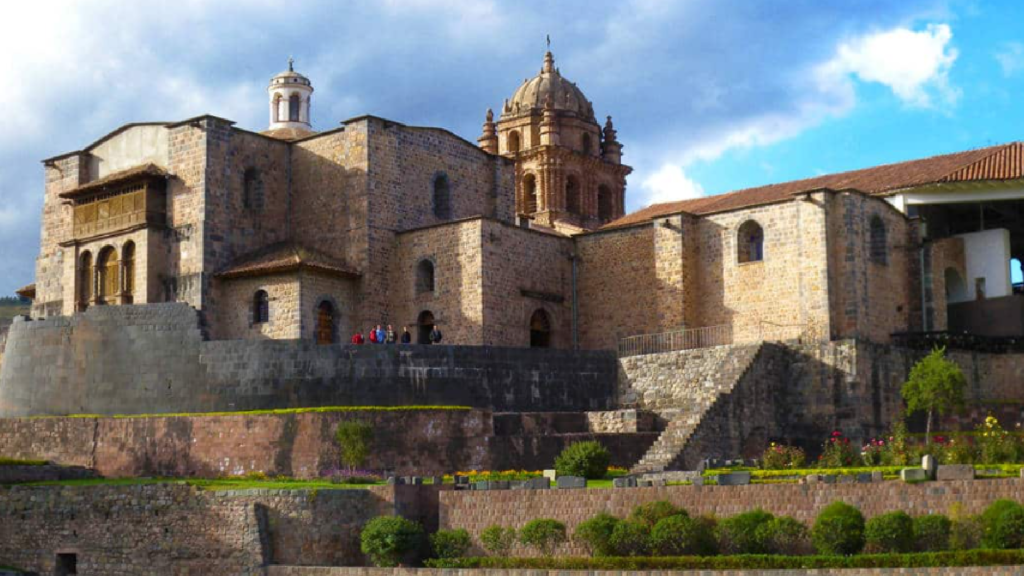
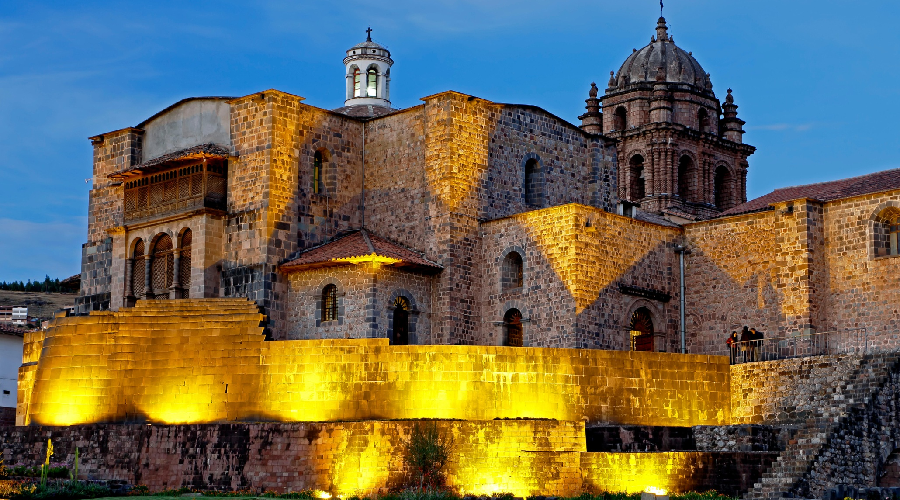
Although much of its original structure was destroyed during the conquest and replaced by the Church of Santo Domingo, its Inca foundations still stand, bearing witness to its majesty. In this article, you will discover its history, symbolic meaning, unique architecture, and how to visit it with respect and depth.
Learn More →
History and Significance of Qoricancha
The name Qoricancha comes from the Quechua words “qori” (gold) and “kancha” (enclosure or courtyard), meaning “Golden Enclosure.” This temple was the spiritual and ceremonial core of Cusco, considered the “navel of the world” by the Incas. From here, sacred roads extended to the four suyus (regions) of the empire.
Qoricancha was primarily dedicated to the solar god Inti, the most revered deity of the Incas. Its walls were originally covered with sheets of pure gold, and inside, there were solid gold statues representing deities and astronomical phenomena.
During colonization, Spanish conquistadors stripped the temple of its gold and built the Convent of Santo Domingo atop its foundations as a symbol of Christianity’s triumph over Andean beliefs. Nevertheless, the symbolic power of Qoricancha remains alive among Cusco’s people and visitors who recognize its cultural importance.
Today, Qoricancha is a key site to understand Andean thought, where religion, astronomy, and nature merged in perfect harmony.
Architecture of the Golden Enclosure
The temple of Qoricancha stands as one of the greatest architectural achievements of the Inca Empire. Its construction combines technical precision, astronomical alignment, and profound religious symbolism.
Main architectural features:
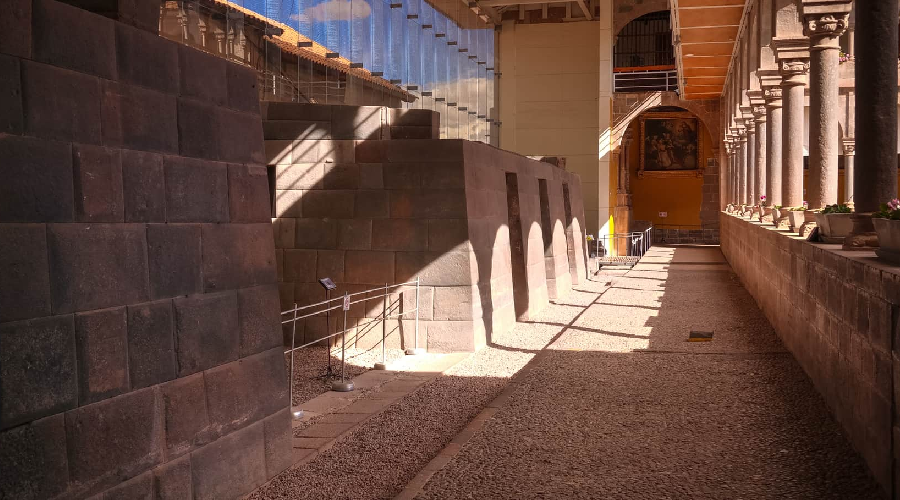
- Cyclopean walls: Built with massive stone blocks perfectly fitted without mortar. These walls have withstood earthquakes that damaged the overlying colonial constructions.
- Trapezoidal windows: Designed to resist seismic movements and orient sunlight on key astronomical dates such as solstices.
- Internal temples: Spaces dedicated to deities like the Moon (Quilla), Venus (Chaska), the Thunderbolt (Illapa), and Pachamama, part of the Andean pantheon.
- Sacred garden: An external garden that housed gold and silver replicas of animals and plants as offerings to Inti.
- Hydraulic channels: Water systems connecting Qoricancha with other religious structures like Sacsayhuamán and Tambomachay.
The design of Qoricancha reveals not only technical mastery but also a deep understanding of the cosmos. Its solar orientation and function as an astronomical observatory make it a jewel of pre-Columbian knowledge.
Conclusion
Qoricancha is much more than a tourist attraction in Cusco. It is a gateway to the soul of the Inca Empire and a testament to the lost splendor of a civilization that understood the universe in balance with nature and spirituality.
Visiting Qoricancha means entering a space where the energy of the sun and the ancient priests who guided the Inca people still vibrate. It is also an opportunity to reflect on Peru’s cultural transformation after the arrival of the Spanish, and how resistance and memory remain alive within its walls.
Include Qoricancha in your travel itinerary and feel how time and ancestral spirit intertwine in every stone, ray of light, and step inside this sacred enclosure.