


April Festivals in Cusco: The Most Sacred Month of the Andean Calendar
April is the most spiritually powerful month in Cusco. If you’re planning a trip to Peru, witnessing the April Festivals in Cusco is a once-in-a-lifetime experience you simply cannot miss. The ancient Inca capital transforms into a living stage where Catholic devotion and Andean traditions merge in extraordinary ways — on the streets, in the plazas, and inside centuries-old churches.
These are not tourist shows. The April Festivals in Cusco are deeply rooted, authentic expressions of faith that draw over 100,000 pilgrims and visitors from across South America and the world. From solemn processions and candlelit Stations of the Cross to ancestral rituals honoring Pachamama, every celebration tells a story thousands of years in the making.
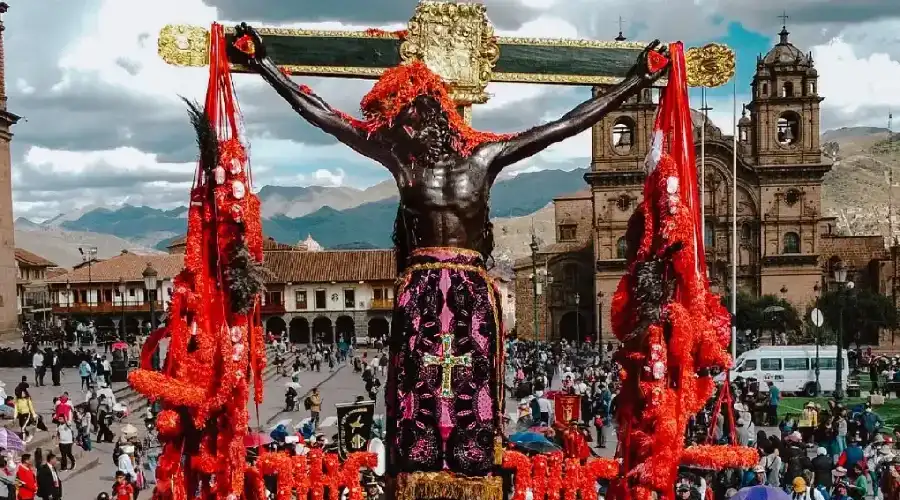
The highlight of the April Festivals in Cusco is the massive procession of the Lord of the Earthquakes — locally known as «Taytacha» — the city’s protective patron since the 17th century. This single event draws more people than any other celebration in the Cusco region, filling the cobblestone streets of the Historic Center with emotion, flowers, music and collective devotion.
Rounding out the month, the Feast of Saint Mark pays tribute to the deep Andean connection with the land, agriculture and Pachamama. Together, these events make April in Cusco one of the most culturally rich travel experiences in all of Latin America.
April 1 – Start of Holy Week in Cusco
Holy Week in Cusco begins on April 1, and from the very first day the city feels different. Churches across the Historic Center intensify their schedules with special masses, preparatory Stations of the Cross and spiritual ceremonies that set the tone for the week ahead.
In traditional Cusco homes, this opening day of the April Festivals is marked by voluntary fasting, abstinence from red meat, and the careful preparation of ceremonial breads that will feature in the celebrations to come. Domestic altars are cleaned and decorated with fresh native flowers — a quiet but meaningful ritual of spiritual renewal.
If you’re visiting Cusco during this period, head to the parishes of San Blas, Santa Ana or San Pedro, where neighborhood communities organize confessions, special blessings and beautifully decorated altars that offer an intimate, authentic glimpse into local religious life.
April 3 – Holy Wednesday: Living Stations of the Cross
Holy Wednesday is one of the most visually stunning and emotionally moving days of the April Festivals in Cusco. Multiple parishes throughout the Historic Center hold living Stations of the Cross — dramatic re-enactments of Christ’s Passion performed by local actors through the colonial cobblestone streets.
Neighborhoods like San Blas, San Pedro, Santa Ana and the Artisan’s Quarter become open-air sacred stages where firelit processions wind through narrow alleys, guided by the glow of traditional torches and thousands of candles. The atmosphere is one of profound contemplation, collective prayer and ancestral spiritual connection.
For travelers, this is a remarkable evening to walk the streets of Cusco and experience faith as a living, breathing tradition — not as a museum piece, but as a community ritual passed down through generations.
April 5 – Good Friday in Cusco: Silence, Solemnity & the Twelve Dishes
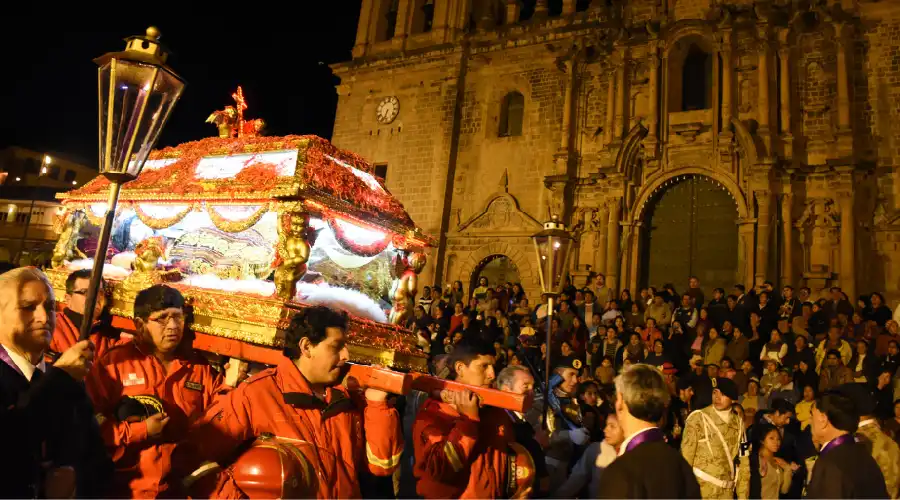
Good Friday is the most solemn day of the April Festivals in Cusco. The imposing Cusco Cathedral, La Compañía de Jesús, San Pedro and La Merced all host deeply moving ceremonies, including the Holy Burial and the Sermon of the Seven Last Words — events that gather thousands of faithful in silent, reverential meditation.
The Historic Center feels almost otherworldly on this day. Streets fall quiet, shops close, and the city collectively pauses in reflection — an experience that leaves a lasting impression on every visitor.
One of the most unique traditions of this day is the family preparation of the «Twelve Dishes» — a symbolic ceremonial banquet blending ancestral Andean ingredients with Christian tradition. Dishes include fanesca, Basque-style cod, traditional stews and local specialties, all reflecting the extraordinary cultural fusion that defines Cusco’s cuisine and identity.
April 6 – Holy Saturday: Fire, Renewal & Andean Ritual
Holy Saturday is a day of anticipation and spiritual preparation within the April Festivals in Cusco. Churches throughout the city hold the solemn Easter Vigil, a night ceremony building toward the joy of Resurrection Sunday.
The ceremonial lighting of the Paschal Candle — a universal symbol of light overcoming darkness — takes place simultaneously across all of Cusco’s churches, creating a rare atmosphere of city-wide spiritual unity that is deeply moving to witness in person.
Beyond the churches, rural communities surrounding Cusco enrich this date with ancestral Andean rituals tied to land fertility and the cyclical renewal of life. Families perform ritual house cleansings, prepare domestic altars and gather to share traditions with younger generations — a living example of the religious syncretism that makes the Cusco region unlike anywhere else on Earth.
April 7 – Easter Sunday: Joy, Flowers & Family in the Andes
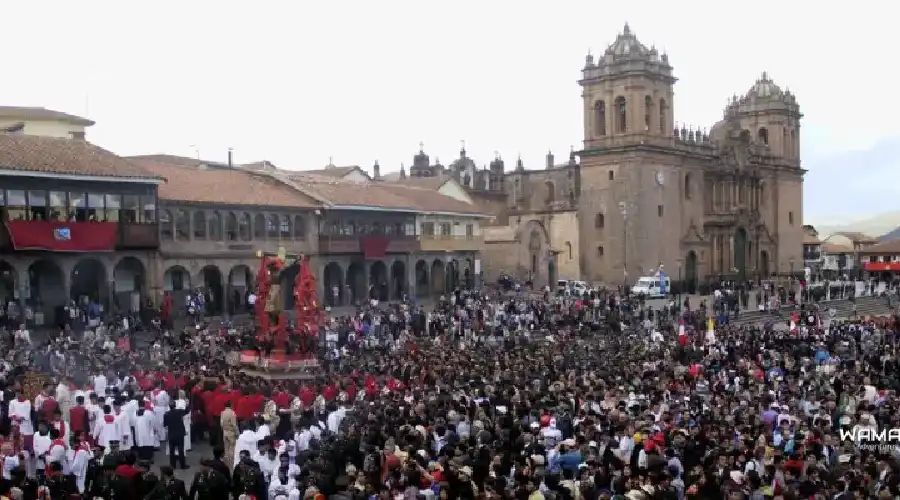
Easter Sunday is the joyful crown of the April Festivals in Cusco. Colonial churches are decorated with fragrant native Andean flowers, traditional choirs fill the Historic Center with hymns of praise, and the entire city exhales after a week of deep spiritual intensity.
Cusco families gather for festive lunches featuring roasted goat, ceremonial pachamanca, homemade Easter sweets and traditional beverages — a delicious, communal celebration of life, hope and togetherness. The bells of every church in the Historic Center ring out through the day, and the streets shift from solemn silence to joyful reunion.
For visitors, Easter Sunday in Cusco is an experience that balances the sacred and the celebratory in a way that few places in the world can match.
April 8 – Holy Monday: The Lord of the Earthquakes Procession
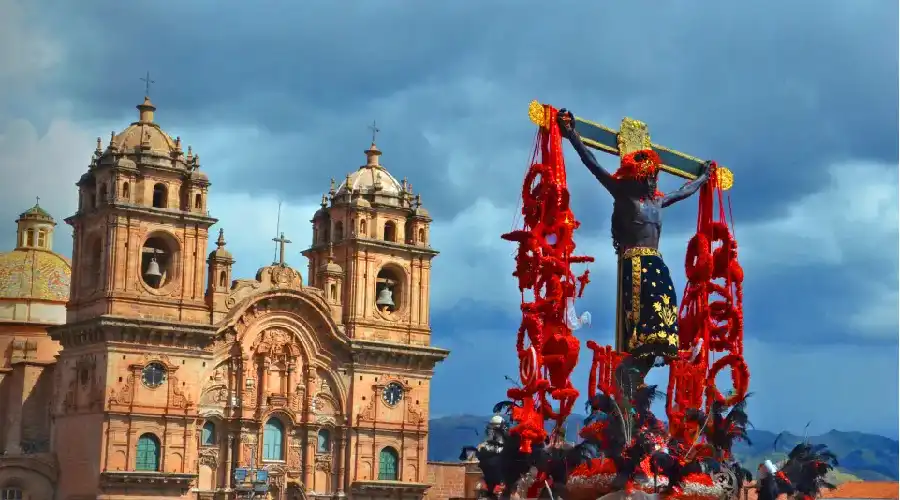
April 8 is the single most important and spectacular day of the April Festivals in Cusco. Holy Monday brings the legendary procession of the Lord of the Earthquakes — «Taytacha» — the beloved protective patron of Cusco, venerated since colonial times.
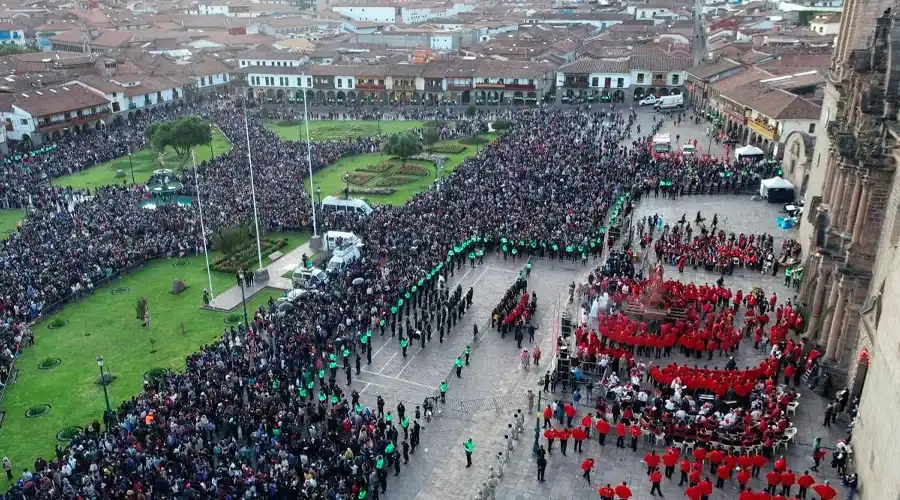
More than 100,000 devotees from across Peru and neighboring countries converge on the Plaza de Armas to pay homage to this sacred image, hand-carved from alder wood in the 16th century. The figure is reverently adorned with red ñucchu petals — native Andean flowers symbolizing both Christ’s blood and the sacred bond with Pachamama — creating one of the most visually breathtaking religious scenes in South America.
The procession lasts approximately eight hours, during which Cusco becomes a living open-air cathedral. Catholic devotion and Andean ritual intertwine seamlessly, transcending social, economic and cultural barriers in a collective expression of faith unlike anything else on the continent.
Street vendors, Andean musicians, traditional artisans and tens of thousands of devotees fill every corner of the Historic Center. If you attend only one event during your trip to Cusco, make it this one.
April 25 – Feast of Saint Mark: Blessing the Land
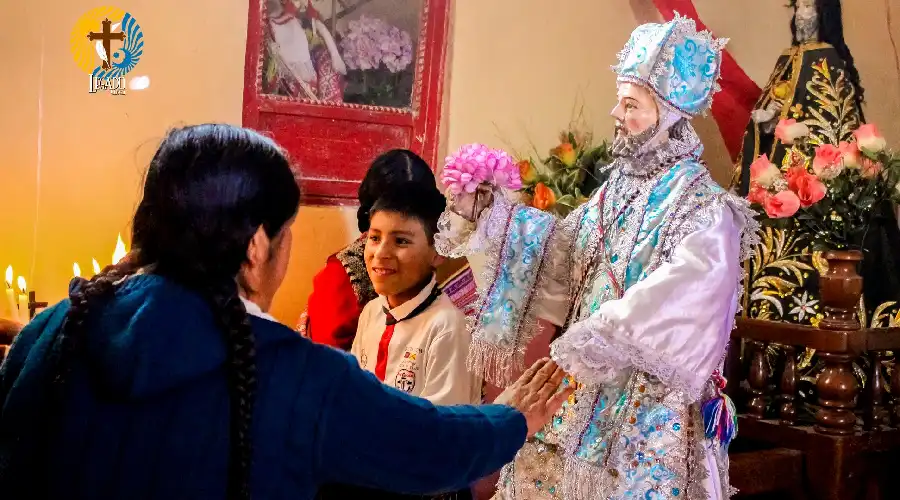
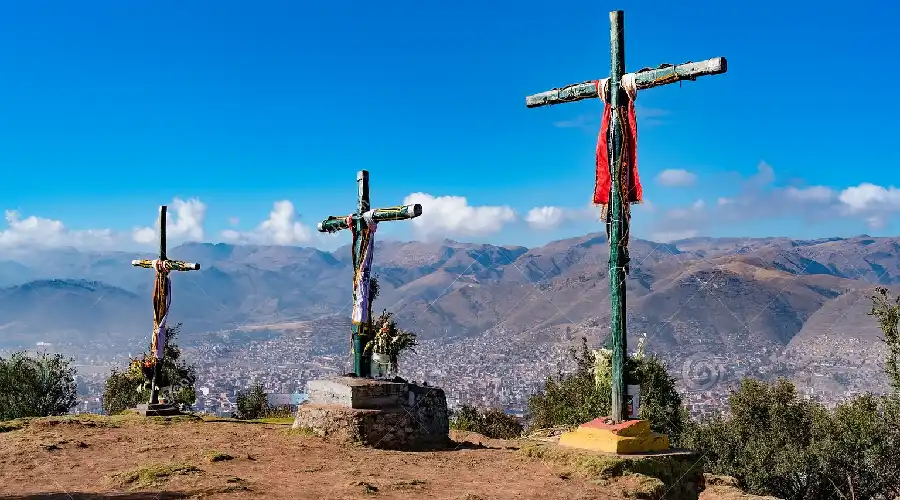
The April Festivals in Cusco close on April 25 with the Feast of Saint Mark, patron saint of Andean farmers, herders and rural workers. In communities such as Cconchacalla, Oropesa, Pisaq and Maras, this celebration holds deep meaning — it is rooted directly in the agricultural cycles and the Andean worldview that has shaped this region for millennia.
Traditional ceremonies bless native seeds, ancestral farming tools, livestock and cultivated fields, harmoniously weaving together Catholic faith and Andean reciprocity. Community fairs become vibrant spaces for exchanging traditional products, native seeds and ancestral knowledge, strengthening local economies and preserving Andean biodiversity.
The Feast of Saint Mark is a fitting close to the April Festivals in Cusco — a reminder that these celebrations go far beyond religion. They are living expressions of identity, community and a worldview in which the sacred, the cultural and the natural are inseparable.
If you have the chance to visit a rural community outside Cusco on this day, do it. It will give you a perspective on Andean life that no museum or city tour can replicate.