






Church of Andahuaylillas: The Sistine Chapel of the Americas
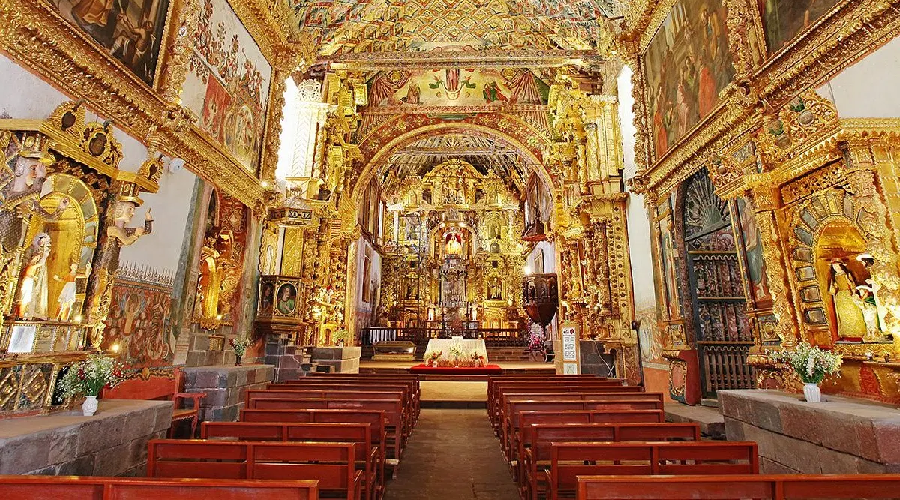
Located in Cusco’s South Valley, the Church of Saint Peter the Apostle of Andahuaylillas is one of the most stunning colonial temples on the entire continent. Commonly known as the «Sistine Chapel of the Americas», this gem of Andean Baroque stands out for its vibrant frescoes, gilded ceilings, carved altarpieces, and symbolism that fuses Christianity with Andean cosmology.
This complete guide takes you through its history, art, and spiritual meaning, explaining why visiting the Church of Andahuaylillas is far more than a tourist stop—it is a mystical and unforgettable cultural experience.
History and Origin
The church was built in the late 16th century by Jesuits atop an ancient Inca site. It is believed that before colonization, this place served as a ceremonial center for Andean cults. Construction records date back to 1570, and much of the work was completed during the 17th century.
Evangelization in this region was intense, and the Jesuits used art as a pedagogical tool. The church became the epicenter of that spiritual and educational mission, with frescoes and altarpieces used to teach Christian doctrine to Quechua-speaking peoples.
Architecture and Interior Art
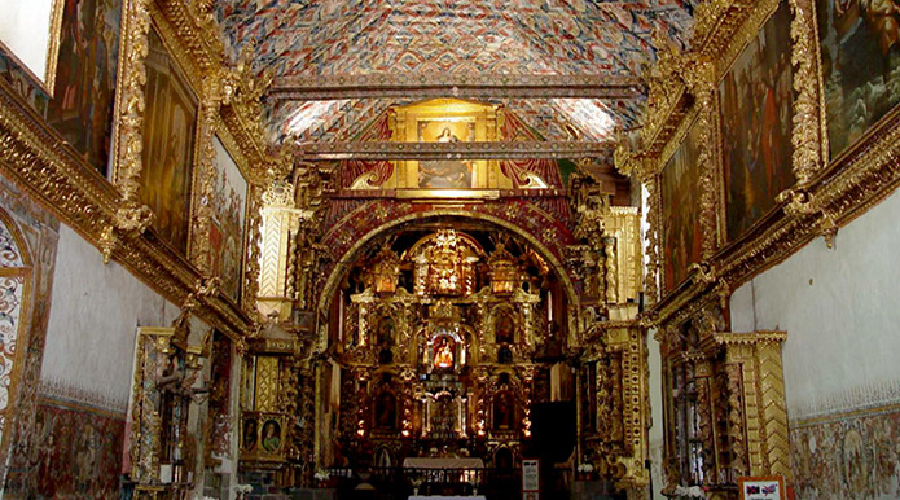
The church’s exterior is modest, built with adobe and stone, featuring a simple façade and bell tower. But upon entering, visitors encounter an explosion of color and detail: coffered ceilings gilded with gold leaf, murals covering all the walls, and a richly carved Baroque main altar.
- Baroque altarpieces: Carved in wood and covered with gold leaf, they depict scenes from the lives of Christ, the Virgin, and the saints.
- Mudejar ceiling: With Moorish influence, decorated with floral and geometric patterns, painted by local artists.
- Colonial pipe organs: One of Peru’s oldest functioning organs, adorned with Christian and Andean symbols.
Symbolism and Iconography
One of the most fascinating aspects of the Church of Andahuaylillas is its mestizo iconography. Christian images coexist with symbols from Andean worldview, creating a unique visual language that helped integrate Catholic faith with the ancestral beliefs of the local population.
- The Road to Heaven and Hell: A didactic mural illustrating the fate of souls according to their earthly actions.
- Musical angels: Representing spiritual connection through art, they play traditional instruments like charangos and quenas.
- Hidden indigenous elements: Details such as suns, mountains, and maize are embedded in the frescoes as signs of religious syncretism.
Cultural and Religious Importance
The Church of Andahuaylillas is part of the Andean Baroque Route, a heritage circuit promoted by the Society of Jesus that links several colonial temples in Cusco’s South Valley. This route offers not just tourist value but also spiritual and academic importance, as it allows the study of religious art and its influence on Andean communities.
Thanks to its preservation and symbolic richness, the church has been declared National Cultural Heritage and is in the process of nomination as a UNESCO World Heritage Site.
Visitor Experience at Andahuaylillas
Upon entering the church, you will feel a mix of awe, peace, and admiration. Sacred music plays softly in the background, the dim lighting reveals golden altars, and the scent of old wood creates a deeply sacred atmosphere.
- Interior photography: Restricted in many areas, but you can buy postcards or books at the entrance.
- Guided entry: Local guides explain each painting, symbol, and artistic detail.
- Accessibility: The main entrance is adapted for seniors and visitors with reduced mobility.
- Surroundings: The town of Andahuaylillas is charming, with cafés, markets, and beautiful rural scenery.
Traveler Tips
- Arrive early: Mornings are best to avoid large groups and enjoy a quieter visit.
- Avoid using flash: Preserve the paintings and respect the sacred atmosphere.
- Bring cash: There’s a symbolic entrance fee and many local stores don’t accept cards.
- Check for events: Occasionally, masses or organ concerts are open to the public.
Conclusion
The Church of Andahuaylillas is more than a work of art—it is a bridge between two worlds: European and Andean, spiritual and human. Its value goes beyond religion, becoming a symbol of identity, resistance, and mestizo creativity.
Visiting it means understanding how art can heal, educate, and unite cultures. If you’re exploring the South Valley of Cusco, don’t miss the opportunity to stop here and marvel at every inch of preserved history.