






History of Machu Picchu
built in the 15th century during the peak of the Inca Empire, probably under the rule of Inca Pachacútec. It is believed
to have been an important religious, political, and administrative center, carefully designed to integrate with the
mountain and the sacred landscape that surrounds it. Its finely carved stone walls, agricultural terraces, and temples
show an extraordinary mastery of engineering and urban planning.Thanks to its strategic location between mountains and gorges, Machu Picchu remained hidden for centuries, which allowed
a large part of its structure to be preserved in very good condition. Unlike other Inca cities, it was not massively
destroyed or looted, so today we can appreciate it almost as its builders conceived it.The citadel was abandoned shortly after the arrival of the Spanish in Peru and remained covered by the dense vegetation
of the cloud forest. Its “rediscovery” for the Western world took place in 1911, when American explorer Hiram Bingham
reached the area guided by local residents. From that moment on, Machu Picchu began to attract the attention of
researchers, travelers, and lovers of history from all over the planet.
Today, Machu Picchu is one of the most important tourist destinations in South America and in the world, recognized as
a UNESCO World Heritage Site since 1983 and as one of the New Seven Wonders of the Modern World. Visiting this place with
a tour to Machu Picchu that is well organized allows you to better understand its past and enjoy
the experience without worrying about logistics or timings.
Learn more →
🔹 Importance in Inca culture
Machu Picchu was one of the most important centers of the Inca Empire not only because of its location, but also because
of its symbolic function. For the Incas, the mountains (apus) were sacred beings, and building a city among peaks,
cliffs, and rivers was a way of honoring nature and getting closer to their deities. The citadel is connected to the
Qhapaq Ñan road system, which facilitated communication with other regions of the empire and reinforced its strategic
character.
The temples, plazas, terraces, and residences of Machu Picchu reveal advanced knowledge of architecture, agriculture, and
astronomy. Many researchers argue that its structures are aligned with solar events, such as solstices, which reinforces
the idea that this place functioned as an astronomical observatory and ceremonial center. Today, walking through these
spaces with a specialized guide adds historical context and allows you to appreciate details that can go unnoticed at
first glance.
🔹 Discovery and conservation
The international recognition of Machu Picchu also brought with it the responsibility of conserving it. Since the middle
of the 20th century, the Peruvian State and several institutions have implemented measures to protect the site against the
impact of tourism, soil erosion, and natural phenomena. Currently, entry is regulated by time slots, daily capacity limits,
and defined circuits, and it is mandatory to present an entrance ticket and follow the rules of the archaeological park.
Traveling with a formal agency such as Haha Trips not only helps you secure your entrance and train tickets in advance,
but also contributes to responsible tourism. By booking well-organized tours to Machu Picchu,
you support the work of local guides, formal operators, and families who make a living from tourism in the Cusco region.
Location
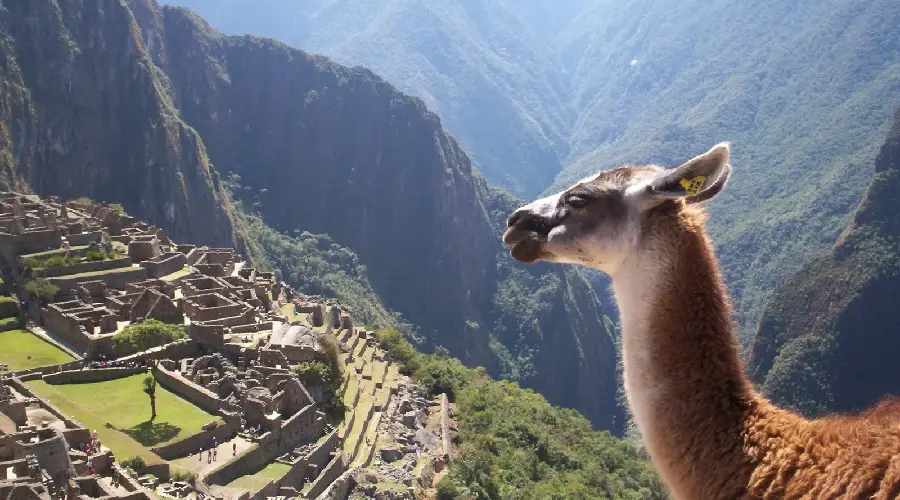
Machu Picchu is located in the mountainous region of Cusco, in southern Peru. The citadel sits at about
2,430 meters above sea level, surrounded by mountains covered by cloud forest and crossed by the Urubamba
River, which winds several hundred meters below. This combination of altitude, climate, and vegetation creates a unique
and deeply mystical landscape.
The citadel is located between the mountains of Machu Picchu (“Old Mountain”) and Huayna Picchu (“Young Mountain”). From
these peaks you can get spectacular views of the whole valley and the Inca constructions. Its location not only had a
strategic and defensive value, but also a spiritual one, since the Incas sought to live in harmony with the environment
and with the protective apus.
For the modern traveler, understanding the location of Machu Picchu is key to planning the itinerary. Many visitors
combine the visit to the citadel with the Sacred Valley of the Incas, the city of Cusco, Rainbow
Mountain or Humantay Lake, making the most of their stay in the region. The
tourist packages to Machu Picchu and Cusco usually include transfers, train tickets, entrance fees and
accommodation, which makes the experience easier.
Altitude of Machu Picchu
As we mentioned, Machu Picchu is located at 2,430 meters above sea level. This altitude is lower than that of the city of
Cusco (3,400 m a.s.l.), which means that many people feel physically better in Machu Picchu than in the historic capital.
Even so, it is important to take altitude into account throughout your trip, especially if you are coming from sea level.
The most common recommendation is to spend at least two nights in Cusco or in the Sacred Valley before visiting the
citadel, so that your body has time to acclimatize. Drinking water frequently, avoiding very heavy meals on the first day,
and walking slowly are simple measures that help a lot. It is also useful to drink coca tea or natural products recommended
by locals.
If you book a tour to Machu Picchu from Cusco or from the Sacred Valley, your itinerary is usually designed so
that the acclimatization is gradual. In this way, you will be able to enjoy the viewpoints, stairways, and routes without
altitude spoiling your experience. At Haha Trips, our travel advisors can help you choose the best route according to your
available days and your physical condition.
How to Get to Machu Picchu
The most common way to reach Machu Picchu is by departing from the city of Cusco or from the Sacred Valley
(Ollantaytambo). The usual journey includes a transfer by tourist transport or private vehicle to the train station, a
train ride to the town of Aguas Calientes (Machu Picchu Pueblo), and finally a bus that goes up to the entrance gate of
the citadel.
There are different types of trains: standard tourist services, panoramic trains with large windows, and luxury services.
Choosing the right option depends on your budget and the type of experience you are looking for. The
Machu Picchu full day tours usually include a tourist train, while multi-day packages allow you to
combine trains of different categories with accommodation in Aguas Calientes.
Another iconic way to arrive is via the famous Inca Trail, a multi-day hike that follows ancient
paths used by the Incas. This route is ideal for adventurous travelers who want to experience direct contact with nature
and history. Due to its popularity, spaces are limited and it is necessary to book several months in advance.
If you prefer a more comfortable and organized experience, the best option is to choose a tour to Machu Picchu
by train from Cusco or Ollantaytambo. At Haha Trips we offer options such as Machu Picchu Full Day,
Machu Picchu 2 Days 1 Night and packages that combine Machu Picchu with the Sacred Valley and the city of Cusco,
so that you don’t miss any of the essentials.
Weather in Machu Picchu
The weather in Machu Picchu is mild and humid for most of the year. Temperatures usually range between
8°C and 22°C, with cool mornings, pleasant days, and somewhat cold nights. Due to its location in the high jungle,
humidity is relatively high and rain can occur even during the dry season.
There are two main seasons:
- Rainy season (November to March): the landscape becomes very green and lush, but there is a higher
chance of showers and fog. The clouds can hide part of the view at times, although they also create a unique mystical
atmosphere. - Dry season (May to October): there is less rain and, in general, clearer skies, which favors
panoramic views. It is the preferred time for most travelers, but also the busiest.
Regardless of the season, it is important to bring layered clothing, a light jacket or raincoat, sunscreen, a hat and
insect repellent. When you book a tour to Machu Picchu with us, you will receive updated recommendations
according to the date of your trip, so that you can pack smartly and avoid surprises with the weather.
Meaning of Machu Picchu
The name “Machu Picchu” comes from Quechua and means “Old Mountain.” This term refers both to the mountain that rises
behind the citadel and to the ancient and sacred character of the place. For the Incas, elevated spaces were points of
connection with the divine, which is why many of their most important constructions were built on summits, hillsides, and
terraces.
Machu Picchu was probably a center of political, religious, and astronomical power. Its temples dedicated to the sun,
its water fountains, the residences of the elite and the agricultural areas reflect a complex social organization. The
precision in stone carving and building orientation suggests that nothing was constructed at random.
Visiting this archaeological site with a complete guide to Machu Picchu in mind will help you understand
that it is not just “beautiful ruins,” but a space filled with symbolism, astronomical knowledge and a deep connection
with nature. When you explore it with a local guide, every wall, window, and terrace gains a deeper meaning.
The Legend of Machu Picchu
There are numerous legends about Machu Picchu that try to explain its purpose and construction. One of the most popular
says that it was a refuge for the Inca elite, used as a resting residence for Inca Pachacútec and his close circle.
Another version suggests that it was a spiritual center where rituals dedicated to the sun, the moon and the mountains
were performed.
Some stories highlight the precision with which the structures would have been aligned with the movements of the sun and
the stars. For example, it is said that certain temples receive the light of sunrise on specific dates, marking important
events in the Inca agricultural and ceremonial calendar.
Beyond the legends, it is undeniable that Machu Picchu continues to inspire questions and awe. Part of the magic of the
experience lies precisely in walking through its narrow streets, observing its impeccable walls and feeling that, despite
the studies, there are still mysteries to be discovered. A good tour to Machu Picchu combines historical
facts with these stories so that your visit is both informative and inspiring.
Tips for Visiting Machu Picchu
To make the most of your visit, it is important to consider some practical tips. This way, you will be able to enjoy the
citadel with comfort and safety, without wasting time or missing photo opportunities.
plants or stones.
If you book a tourist package to Machu Picchu with Haha Trips, our team takes care of all logistics:
entrance tickets, train tickets, buses, hotel, and official guide. That way, you can focus on enjoying, taking photos and
living the experience to the fullest.
What Is the Best Time to Visit Machu Picchu?
The best time to visit Machu Picchu is usually the dry season, between May and October. During these months, rains are
less frequent and the sky tends to be clearer, which allows you to better appreciate the mountains and the citadel from
the viewpoints. The months of June, July and August are especially popular, so you will find a greater influx of tourists.
If you prefer a quieter atmosphere, you can choose to travel in April, May, September or October, when the weather is
still favorable but the number of visitors is slightly lower. During the rainy season (November to March), it is also
possible to visit Machu Picchu, but you should be prepared for showers and possible closures of trekking routes.
Whatever month you choose, the ideal is to book your tours to Machu Picchu in advance. This allows you to
secure your entry times, train type and combinations with other destinations such as the Sacred Valley, Rainbow Mountain
or Humantay Lake.
Our Recommended Tours
After going through these Machu Picchu general facts, the next step is to choose the tour that best fits
your travel style. At Haha Trips, we offer various options so you can experience Machu Picchu in the most comfortable,
safe, and personalized way possible.
Some of our most recommended options are:
- Machu Picchu Full Day Tour: ideal if you have little time and want to make the most of a full day
of train travel, guided visit and free time for photos. - Machu Picchu 2 Days 1 Night: perfect for those who want to spend the night in Aguas Calientes, go up
calmly and enjoy the citadel at a more relaxed pace. - Sacred Valley + Machu Picchu: combines a visit to the main sites of the Sacred Valley of the Incas
with a special day in Machu Picchu, one of the most complete experiences to discover the region. - Inca Trail to Machu Picchu: multi-day trekking for adventurers seeking a deep connection with nature
and history, walking along the original Inca paths. - Cusco and Machu Picchu Packages (4, 5 or 7 days): include city tour in Cusco, Sacred Valley, Machu
Picchu and, if you wish, extensions to Rainbow Mountain or Humantay Lake.
Our team will help you choose the best option according to your time, budget and preferences. Whether you are looking for a
trip to Machu Picchu with your family, a romantic getaway or an adventure with friends, we have the
perfect tour for you. Explore our options, book in advance and get ready to live one of the most incredible experiences of
your life.