






As an educational platform, the Museum of Contemporary Art connects local artists with national and international networks; promotes research, catalog publishing, and the circulation of works; and fosters the participation of schools, families, and the general public. This complete guide brings together the institutional history, the cultural relevance of the project, an overview of collections and recent installations, key aspects of its architecture adapted to museographic uses, and practical recommendations to plan the ideal visit. If you are looking for an option that complements the archaeological circuits with a contemporary perspective, the Museum of Contemporary Art is an essential stop to experience creative Cusco.
History of the Museum
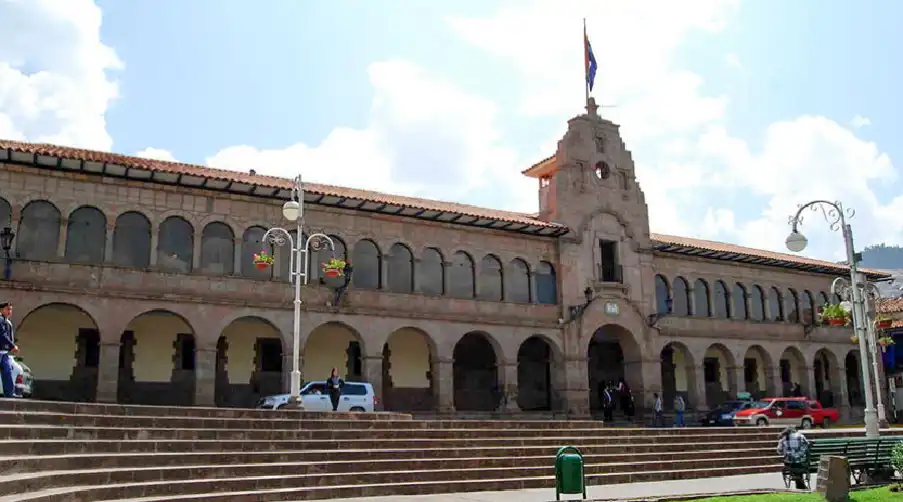
The origin of the Museum of Contemporary Art responds to a historical need: to provide Cusco with a public space that would showcase the production of the 20th and 21st centuries and connect it with the city’s daily life. From its first initiatives, driven by cultural managers and local authorities, the project focused on three fronts: building a representative collection, professionalizing museum management, and creating a program of activities that integrated the community.
During its first stage, donations and loans from regional artists were prioritized; later, works by Peruvian and Latin American creators were incorporated, expanding media and languages (painting, photography, installation, video, and contemporary textile art). The Museum of Contemporary Art established links with universities and collectives, organized residencies, launched curatorial calls, and formed mediation teams to serve diverse audiences. This openness consolidated lines of work on Andean landscape and urbanity, memory and archives, body and gender, sustainability, and emerging technologies. Over time, the museum became a regional reference for the research and exhibition of living art, positioning Cusco not only as a heritage capital but also as a hub of contemporary creativity.
Cultural and Heritage Importance
The Museum of Contemporary Art plays a key role in Cusco’s cultural ecosystem for several complementary reasons:
- Identity in motion: its exhibitions reveal how Andean tradition is reinterpreted from the present. The museum does not replace archaeological heritage; it complements it with current questions that invite reflection on territory, community, and the future.
- Education and cultural citizenship: through mediators, guides, and school activities, the Museum of Contemporary Art develops aesthetic appreciation and critical thinking skills in children, teenagers, and adults.
- Creative economy: it promotes the professionalization of artists, curators, producers, and designers; fosters publications, the circulation of works, and responsible acquisition, energizing the local ecosystem.
- Sustainable cultural tourism: it offers a high-quality experience that decentralizes tourist flows, diversifies activities, and promotes good practices (accessibility, respect for copyright, waste minimization).
For the demanding visitor, the Museum of Contemporary Art is a gateway to understanding today’s Peru: a country that creates, debates, and transforms itself.
Collections and Exhibitions
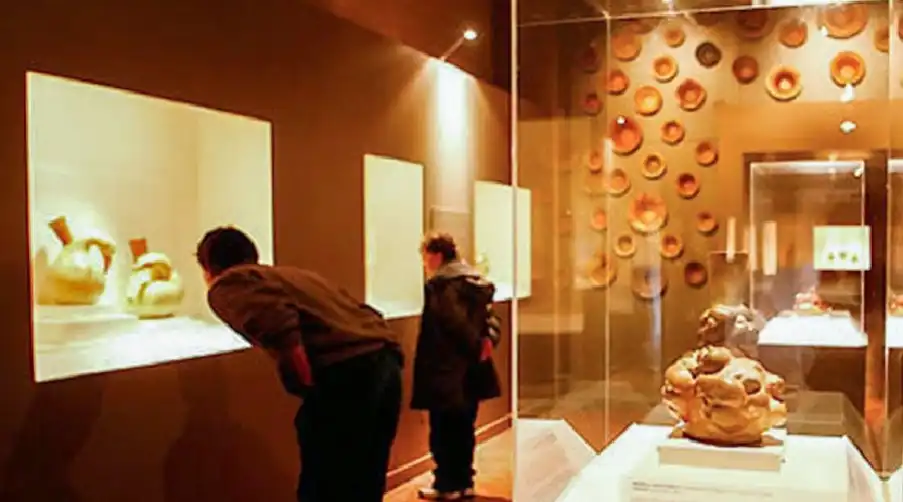
The collection of the Museum of Contemporary Art is dynamic: it grows through acquisitions, donations, and works produced during residencies. Its thematic and media-based nuclei include:
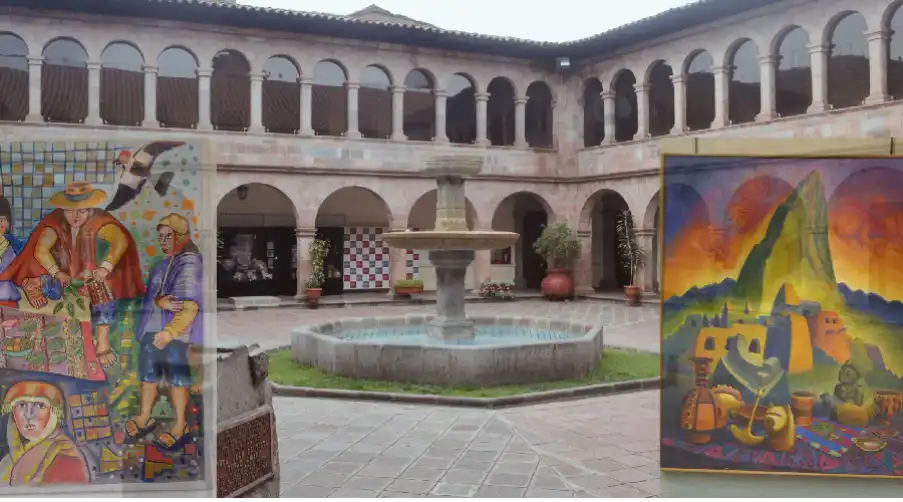
- Painting and hybrid supports: from symbolic figuration and neo-Andean styles to geometric abstraction; layers of pigment, collage, resins, and local materials converse with the colors of the highlands.
- Sculpture and installation: pieces in metal, wood, stone, ceramics, vegetable fibers, and creative recycling; site-specific installations that transform space and address memory, body, and landscape.
- Contemporary photography: documentary and experimental projects on migration, festivals, rituals, urbanism, and Andean ecologies; analog and digital series, photo-performance, and intervened archives.
- Video art and expanded cinema: works exploring language, time, and sound; immersive installations with mapped projection, multichannel audio, and generative programming.
- Contemporary textile: reinterpretations of the loom, natural dyes, and embroidery as a critical language on gender, territory, and community memory.
- Digital and interactive art: works with sensors, augmented reality, open data, and data visualization; participatory experiences that turn the audience into co-authors.
In addition to the collection, the Museum of Contemporary Art structures its programming around curatorial themes that connect art and territory:
- Urban Andes: perspectives on housing, tourism, mobility, and public space in Cusco; projects that dialogue with neighborhoods and markets.
- Memory and Water: artistic research on watersheds, climate crisis, and ancestral knowledge; installations that invite reflection on sustainability and environmental justice.
- Languages of the Body: performance, dance, and video; experiences that question identity, work, and affections.
- Living Archive: rescue and activation of family, community, and photographic archives; production of publications and catalogs with open licenses.
Each season, the Museum of Contemporary Art presents temporary exhibitions that renew its script: retrospectives of key artists, group shows on urgent themes, and collaborative projects with rural communities. This variety guarantees a fresh experience for frequent visitors and travelers alike.
Architecture and Design
The building of the Museum of Contemporary Art adapts a Cusco mansion to current museographic standards. The intervention respects stone and adobe walls while incorporating modular halls, adjustable neutral lighting, climate control, UV-filtered display cases, and humidity-controlled storage for conservation. The central courtyard functions as an agora and stage for presentations, editorial fairs, and open-air cinema.
The museography prioritizes clear routes: bilingual signage, accessible curatorial texts, ramps, and rest areas. Sound is carefully managed so that video installations and sound art coexist without interference. The bookstore-shop completes the experience with catalogs, independent editions, and pieces of local design. This functional and welcoming architecture allows the Museum of Contemporary Art to welcome diverse audiences without sacrificing the technical quality required by contemporary art.
Visitor Experience
A typical visit to the Museum of Contemporary Art lasts between 75 and 120 minutes, although video art lovers often stay longer. The recommended route includes:
- Daily map: check at the ticket office which rooms are rotating, the length of audiovisual pieces, and the schedule of activities.
- Permanent rooms: an overview of Cusqueñan and Peruvian authors with an emphasis on identity, landscape, body, and mixed techniques.
- Temporary exhibitions: curatorial projects that connect the local context with global debates on environment, migration, and technologies.
- Media library and education: a selection of catalogs, fanzines, and artist publications; short workshops on graphics, drawing, or photobooks depending on the agenda.
- Shop and creative souvenirs: prints, postcards, limited editions, and design objects linked to current exhibitions.
For photography, the corridors and courtyards offer clean lines and colonial textures in contrast with contemporary works. Respect registration rules (no flash, safety distances) and request permission when dealing with performances or works with reserved rights. If traveling with children, ask for discovery guides: the Museum of Contemporary Art provides playful material that turns the visit into a search for shapes, colors, and stories.
Tips for Visiting
Make the most of your visit to the Museum of Contemporary Art with these practical recommendations:
- Schedules and agenda: check the program before going; many activities (talks, screenings, guided tours) require prior registration.
- Tickets and discounts: verify updated rates and benefits for students, teachers, and residents. Some days offer free admission.
- Guided tour or mediation: reading contemporary works improves with context; ask about themed tours according to your interest (textile, video, installation).
- Recommended time: set aside at least 90 minutes if there are immersive installations; add 30 more minutes for the media library or shop.
- Responsible photography: check which rooms allow it and avoid flash. In performances, respect both artists and audience.
- Accessibility: barrier-free routes and portable seats are available; request assistance if needed.
- Combined route: integrate your visit with other spaces in the historic center for a complete cultural day.
- Sustainability: bring a reusable bottle and minimize waste; many works address the environmental crisis.
- Families and schools: request educational material; the Museum of Contemporary Art has activities for different ages.
- Best time: morning opening or early afternoon, when there is less crowd and better light in the courtyard.
Conclusion
The Museum of Contemporary Art confirms that Cusco is not only monumental past: it is also a creative, diverse, and critical present. Its halls integrate painting, installation, textile, photography, video, and digital art to narrate the tensions and hopes of today’s Peru; its mediation opens doors for any visitor to understand, enjoy, and debate; its architecture and museography facilitate accessible and sustainable routes. Include it in your itinerary to balance archaeology, history, and contemporary creation. Come back in another season: each new exhibition at the Museum of Contemporary Art raises different questions and invites you to see Cusco with new eyes.
[tours_carrusel]