






Visiting the Popular Art Museum means discovering the history of crafts, the circuits of festivity and devotion, the exchange routes between valley and highlands, and the processes of innovation that today dialogue with responsible tourism and the creative economy. In this complete guide you will find its history, its cultural value, a wide description of collections and exhibitions, architectural and museographic keys, the visitor’s experience, and practical advice to plan your visit—whether it is your first time in Cusco or you return wishing to discover a different facet of the city.
With a curatorial proposal that integrates tradition and contemporaneity, the Popular Art Museum demonstrates that heritage is not only ruin or relic: it is craft, community, and future.
History of the Museum
The Popular Art Museum was born from a collective impulse between artists, cultural managers, and citizens to recognize the value of traditional crafts and their power to narrate Andean life. The collection began with donations from Cusqueñan families, selective public purchases, folk art contests, and scholarship programs for young artisans. Over time, the museum structured a heritage that records regional styles, workshop genealogies, technical innovations, and emblematic pieces awarded at national competitions.
The history of the Popular Art Museum is also the history of the city: a weave of fairs, festivities, markets, and workshops that, since viceregal times, articulated the circulation of images, designs, and raw materials. In the 20th century, with the consolidation of cultural tourism, arose the need to preserve, research, and exhibit works that, although born from use and festivity, deserved museographic conditions for their conservation. The museum assumed this task without isolating the practice from its contexts: it maintains links with communities, accompanies training processes, and documents the changes that each generation brings to the crafts.
Today, the Popular Art Museum is recognized as a living archive: its halls show continuities and ruptures, and its public program connects traditional masters with students, researchers, and travelers who seek to understand the social meaning of folk art.
Cultural and Heritage Importance
The Popular Art Museum is strategic for understanding Cusqueñan and Andean identity for reasons that reinforce one another:
- Continuity of knowledge: it documents techniques of carving, ceramics, imagery, silversmithing, textiles, carved gourds, and tinwork, ensuring intergenerational transmission and the record of local variations.
- Memory and devotion: it explains the role of art in patron saint festivals, processions, nativity scenes, domestic altars, and dances; each piece reveals emotional and spiritual bonds.
- Creative economy: the museum highlights value chains (inputs, workshops, fairs, responsible tourism) and promotes fair prices, encouraging conscious purchases and ethical trade.
- Education and mediation: it opens folk art to schools, families, and international audiences with guided tours, initiation workshops, demonstrations, and didactic materials.
- Responsible innovation: it exhibits how masters reinterpret ancestral motifs with new media and technologies without losing authenticity.
For visitors, the Popular Art Museum provides keys to read the city: behind the beauty of a retablo or a mask lie territories, migration stories, echoes of music and ritual, and even answers to environmental challenges through creative recycling and low-impact dyes.
Collections and Exhibitions
The scope of the Popular Art Museum allows a representative journey through Andean and Peruvian folk art. Its permanent nuclei and temporary exhibitions include:
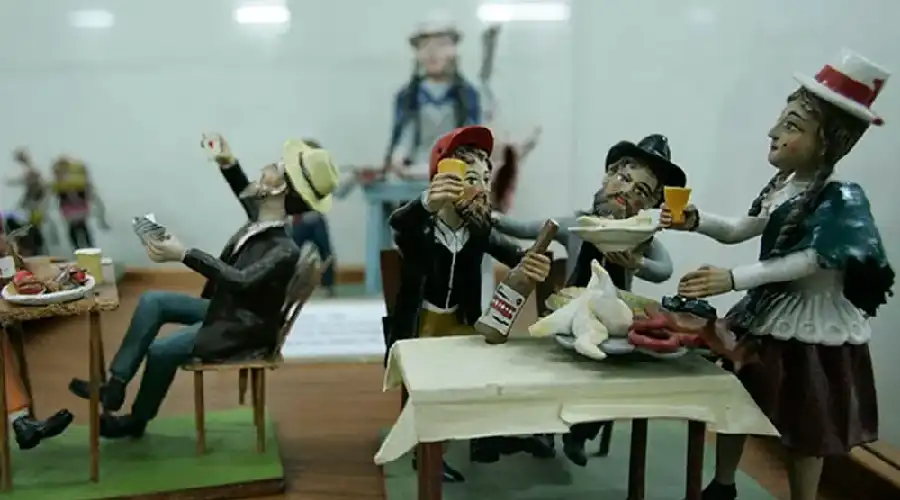
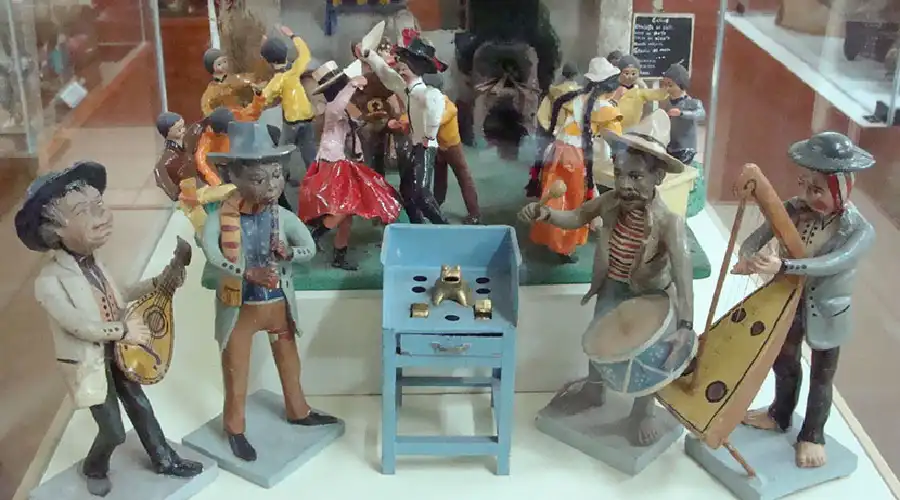
- Imagery and retablos: polychrome carvings, box retablos, and costumbrista scenes narrating trades, markets, nativity scenes, and miracles. Visitors can appreciate mastery of assembly, miniaturism, gilding, and mestizo iconography where saints coexist with musicians and festive characters.
- Masks and dances: sets in wood, leather, fabric, fiber, and metal used in parades and pilgrimages. Each mask embodies humor, social critique, and community memory. Explanatory panels connect them with Qoyllur Rit’i, Corpus Christi, and carnival celebrations.
- Contemporary textiles: mantles, chullos, llicllas, and tapestries combining alpaca or sheep wool with natural dyes. They reveal complex warps, pallay (design), and agricultural, astronomical, and ritual symbolism.
- Ceramics and polychrome clay: from utilitarian vessels to narrative sculptures; techniques of burnishing, slip, smoking, and traditional firing; pieces depicting fauna, myths, and urban scenes.
- Silversmithing and filigree: reliquaries, jewelry, and liturgical objects that reflect the dialogue between mestizo workshops and popular devotion. Exhibits explain polishing, openwork, and fine soldering.
- Carved gourds and wooden sculptures: visual chronicles of festivals, journeys, harvests, and love stories. The fine line of the buril transforms surfaces into narratives; in wood, sculptures stand out with artisan patinas.
- Creative tinwork and artistic recycling: lanterns, toys, and miniatures that resignify everyday materials, promoting sustainability and visual humor.
In addition, the Popular Art Museum organizes temporary exhibitions that activate the collection: retrospectives of masters, thematic curations on itineraries (from workshop to fair), dialogues with contemporary art, and participatory exhibitions where communities build installations and collective altars. These proposals are accompanied by catalogs, video capsules, audio guides, and mediation activities.
The collection is documented with technical records, provenance maps, and testimonies from creators. Thus, the museum allows us to trace how motifs travel—from loom to ceramic, from retablo to mask—and how they transform depending on the festival, the market, or migration. For researchers, the Popular Art Museum offers a solid basis to study material culture, craft economies, and pedagogies of making.
Architecture and Design
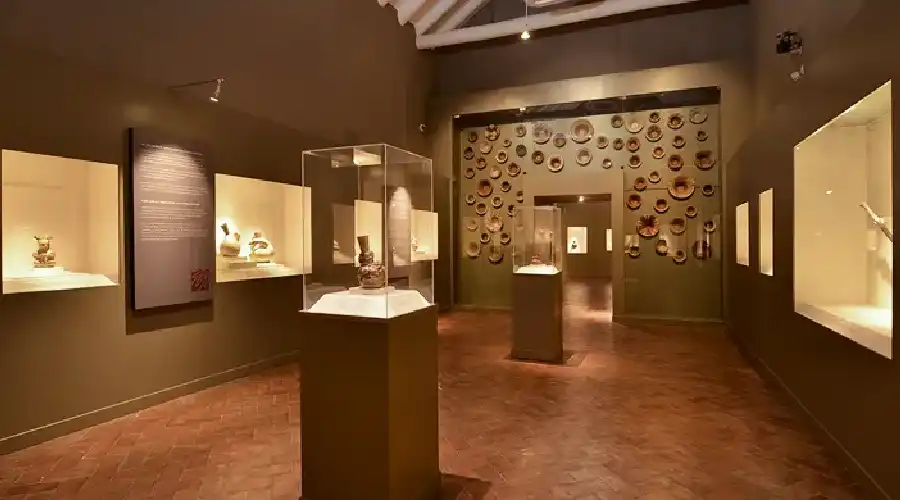
The building of the Popular Art Museum adapts a Cusco mansion to standards of conservation and accessibility. The stone and adobe walls preserve its historical character, while modular rooms allow the installation of monumental retablos, textile showcases, and devices for suspended masks.
Adjustable neutral lighting prevents reflections on glass and protects pigments and fibers; climate control stabilizes temperature and humidity; display cases incorporate UV filters and invisible supports so as not to interfere with the reading of the pieces. Bilingual signage and clear curatorial texts facilitate understanding for both national and foreign visitors. Barrier-free routes, rest seats, and areas for breastfeeding or silence make the Popular Art Museum a welcoming space for all ages.
The museographic design proposes pauses: patios and corridors invite visitors to breathe, take notes, and observe the detail of meticulous techniques. On special dates, the patio becomes a stage for music, dance, and live craft demonstrations.
Visitor Experience
Touring the Popular Art Museum takes between 90 and 120 minutes if you decide to read the texts, watch short videos, and observe processes in detail. A typical visit may follow this flow:
- Daily map: at the entrance, check current exhibitions, demonstration schedules, and whether there are family workshops or talks.
- Identity and craft halls: introduction to materials, tools, and techniques (loom, wheel, buril, chisels, molds); didactic panels help identify production steps.
- Retablos and masks: immersion in festivity and ritual; QR codes link to audios of traditional music and stories from masters.
- Textile and color: exhibition of natural dyes (cochineal, molle, qolle) and pallay patterns; opportunity to compare iconography from different regions.
- Temporary exhibition: projects that cross folk and contemporary art, or retrospectives of family workshops.
- Shop and publications: catalogs, postcards, independent editions, and crafts with certified provenance.
If you are interested in photography, the corridors and patios offer perfect lines and textures for clean frames; always respect museum policies (no flash and safe distances). For families, the Popular Art Museum offers playful search cards for shapes, animals, or symbols that turn the visit into a game. Researchers may request access to the media library and audio interviews that the museum preserves as part of its living archive.
Tips for Visiting
To make the most of your visit to the Popular Art Museum, consider these practical recommendations:
- Opening hours: check the program; some craft demonstrations are scheduled at specific times and are highly recommended.
- Tickets and discounts: verify current rates and benefits for students, teachers, and residents; some days offer free admission or complimentary activities.
- Mediation and guided tours: a mediator changes the experience; ask for themed tours (retablo, textile, mask, ceramics) according to your interest.
- Recommended time: allow at least 90 minutes; add 30 more if you join workshops or wish to consult the media library.
- Responsible photography: respect the rules; some pieces cannot be photographed due to copyright or material fragility.
- Accessibility: there are barrier-free routes, portable seats, and priority care; ask at the ticket office if you need special support.
- Conscious shopping: if you purchase items at the shop, ask about the author, provenance, and techniques; this directly supports workshops and communities.
- Combined route: integrate your visit with craft markets, artisan neighborhoods, and other museums in the historic center for a full cultural day.
- Sustainability: bring a reusable bottle, minimize waste, and prefer walking; many projects of the Popular Art Museum address environmental issues.
- Best time: morning opening to avoid crowds and enjoy soft light in patios and corridors.
Conclusion
The Popular Art Museum is a key ally for reading Cusco in depth: its halls show how craft becomes material memory, creative economy, and a project for the future. By bringing together retablos, masks, textiles, ceramics, silversmithing, and proposals of artistic recycling, the museum reveals that popular culture is sophisticated in technique and vast in meanings. Its accessible mediation, adapted architecture, and changing program invite visitors to return in different seasons.
Include it in your itinerary to balance archaeology, history, and living creation. You will leave with new keys to interpret fairs, festivals, and workshops, and with the desire to return to a space that changes with you: every visit to the Popular Art Museum opens questions and learning paths that connect travelers, families, and communities with the creative essence of the Andes.
[tours_carrusel]