






Reaching Machu Picchu on foot is one of those life-changing experiences. However, when it comes to planning the adventure, almost every traveler runs into the same big question: Salkantay Trek or Inca Trail? Both are legendary routes that cross dreamlike landscapes, but the experience, logistics, and physical effort they require are completely different.
While one takes you along stone paths built by the Incas themselves more than 500 years ago, the other challenges you to cross an imposing snow-covered pass surrounded by glaciers and turquoise lagoons.
At Haha Trips we know there isn’t one option that’s “better” than the other, but rather an ideal option for each type of traveler. In this comparative guide, we take an in-depth look at the differences between the Salkantay Trek and the Inca Trail so you can make the perfect decision for your trip in 2026.
What will we compare in this post?
- The Scenery: Inca history and mysticism vs. wild nature and glaciers.
- Physical Difficulty: Which one demands more from your legs and lungs.
- Availability and Planning: The big headache of permits.
- Budget and Accommodation: Traditional campsites vs. domes and lodges.

Comparison Table: Salkantay Trek vs. Inca Trail at a Glance
Before getting into the technical details, here’s a quick summary of the key differences to consider for your 2026 trip:
| Aspect | Traditional Inca Trail (4 days) | Classic Salkantay Trek (5 days) |
|---|---|---|
| Main Scenery | Inca ruins, cloud forest, historic stone paths. | Glaciers, turquoise lagoons (Humantay), high jungle. |
| Highest Point | Dead Woman’s Pass (4,215 masl) | Salkantay Pass (4,630 masl) |
| Total Distance | 43 kilometers | 74 kilometers |
| Advance Booking | Mandatory (5 to 6 months ahead) | Flexible (can book with just a few weeks’ notice) |
| Entry to Machu Picchu | On foot, directly through the Sun Gate (Intipunku) | By train or hike from Hidroeléctrica to Aguas Calientes |
1. The Scenery: Living History vs. Untamed Nature
The first major difference lies in what your eyes will see throughout the days of hiking.
Inca Trail: The Royal Path of History
The Inca Trail is, above all, an archaeological and cultural journey. You walk along the exact same network of trails the Incas used to connect Cusco with its sacred citadels:
- Mysticism and Ruins: Along the route you’ll visit impressive archaeological complexes such as Patallacta, Runkurakay, Sayacmarca, and the beautiful Phuyupatamarca (“the city in the clouds”). Only those who hike this route have exclusive access to these sites.
- The climax of the trip: On the fourth day you enter Machu Picchu on foot through the iconic Sun Gate (Intipunku) right as the sun rises, a unique perspective no other tour offers.
Salkantay Trek: An Adventure of Natural Contrasts
Salkantay doesn’t stand out for archaeological ruins along the way, but for its untamed geography and the rawness of its natural landscapes:
- From glaciers to jungle: On the first day you visit the famous Humantay Lagoon, a brilliant turquoise. On the second day you touch snow at the foot of the imposing Salkantay peak (the guardian “Apu” of Cusco) at over 4,600 meters, and just a few hours later you descend into the dense vegetation of the high jungle, passing coffee plantations and fruit orchards.
- Arrival at Machu Picchu: The trek ends in the town of Aguas Calientes (Machu Picchu Pueblo), where you spend the night at a hotel before taking a bus up to the citadel the next day.
Pata Tip: If you’re drawn to history, archaeology, and want to feel like you’re traveling through time, your choice is the Inca Trail. If you prefer wild high-mountain landscapes, colorful lagoons, and pure trekking adventure, Salkantay will win you over.
2. Physical Difficulty and Altitude: Which One Demands More From Your Legs?
Hiking at high altitude in the Andes is no joke. Comparing the physical difficulty of the Salkantay Trek vs the Inca Trail, we find two completely different challenges for your stamina, your knees, and your lungs.
Inca Trail: Endless Stairs and Tough on the Knees
Although the maximum altitude is lower than Salkantay’s, the Inca Trail has its own “trap”: the stairs.
- The terrain: Much of the route consists of thousands of original stone steps built by the Incas. Climbing them is an intense cardiovascular challenge, but the real test comes on the way down on the third day, which puts serious strain on your knees and joints.
- The critical point: On the second day you climb to the dreaded Dead Woman’s Pass (Warmiwañusqa) at 4,215 masl. It’s a steep, constant climb that will leave you gasping for air, but once you’re past it, the trail becomes much friendlier.
Salkantay Trek: Extreme Altitude and Long Distances
Salkantay is physically more demanding in terms of pure distance and extreme altitude.
- The terrain: You walk on dirt trails, loose rocks, gravel, and muddy areas if the weather turns. The effort is more constant and the daily hiking distances are noticeably longer (nearly double the total kilometers of the Inca Trail).
- The critical point: On the second day you cross Salkantay Pass at an impressive 4,630 masl. Walking at this altitude with less oxygen in the air makes every step feel three times heavier. On top of that, the cold at this frozen pass can be extreme.
Pata Tip: For either route, preparation is key to success. At Haha Trips we always recommend our travelers spend at least 2 full days acclimatizing in the city of Cusco before starting any trek. Use that time for relaxed tours like the City Tour or the Sacred Valley to prepare your lungs for the real challenge of the mountains.
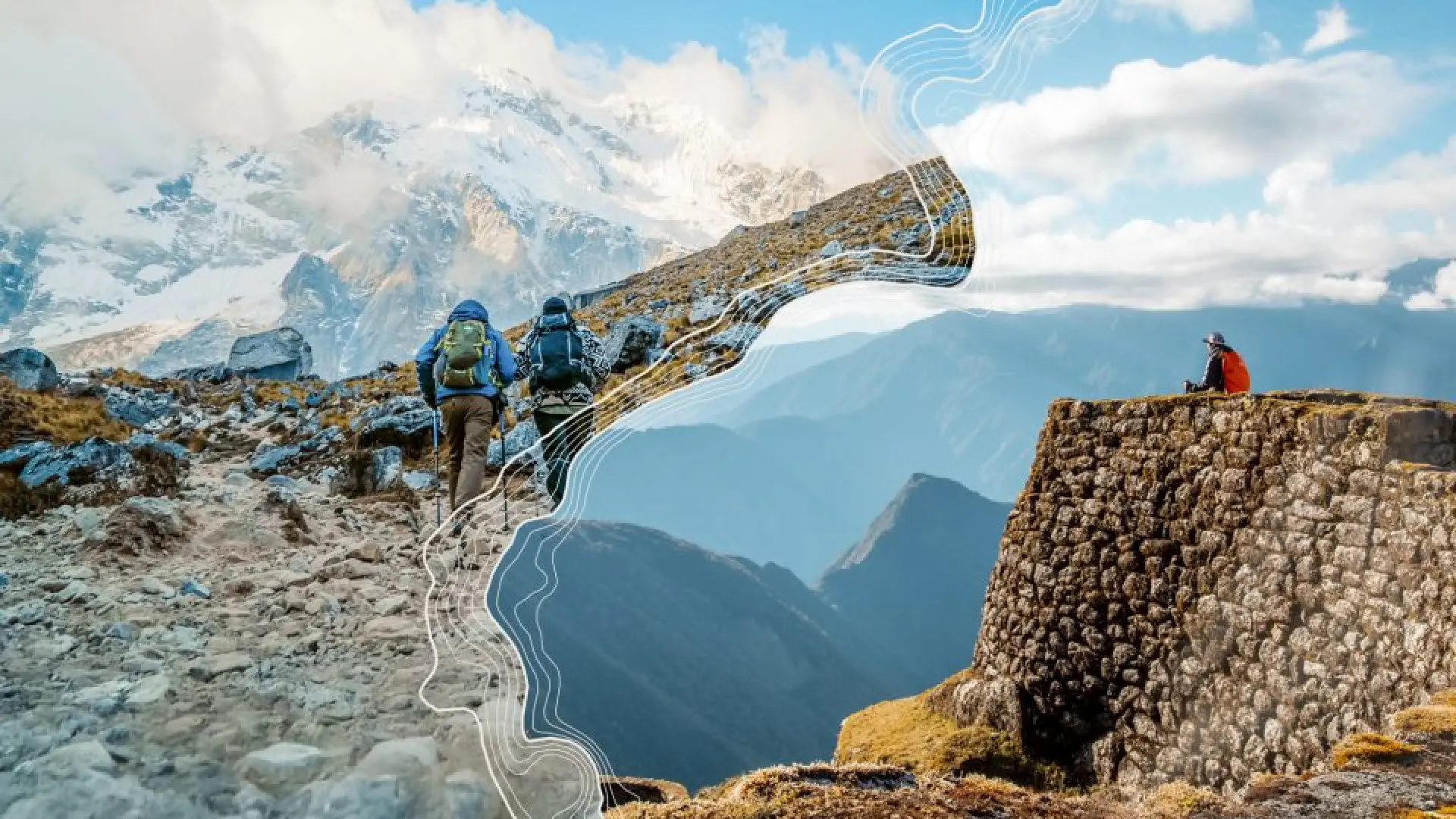
3. Planning, Permits, and Accommodation: The Deciding Factor
Beyond the scenery and physical effort, there’s a logistical factor that often catches many travelers off guard and ends up deciding the route for them: permit availability and camping style.
Inca Trail: Limited Permits and Booking Months in Advance
The Inca Trail is heavily regulated by the Peruvian government to protect its archaeological heritage:
- The big limit: Only 500 people are allowed on the trail per day (including guides, porters, and cooks). This means the actual tickets available for tourists are only around 200 per day.
- Mandatory advance booking: To hike the Inca Trail during high season (May to September), you need to book 5 to 6 months in advance. If you’re looking for last-minute dates, the answer is almost always “no availability.”
- Accommodation: You sleep in traditional tents at regulated state-run campsites. There are no hot showers or modern comforts along the route; it’s an experience of total disconnection.
Salkantay Trek: Flexibility and Modern Lodging Options
Since it doesn’t follow sections of the original Inca Trail, Salkantay offers a much more traveler-friendly logistical picture:
- Flexible availability: There’s no strict daily permit limit set by the Peruvian government. You can book your trek with just a few weeks’ notice, making it the perfect “lifesaver” for last-minute plans.
- Lodging styles: It’s a much more commercialized and comfortable route. At Haha Trips we offer options to sleep in spectacular glass geodesic domes facing the glaciers, or in Andean cabins with hot showers and comfortable beds.
Conclusion: Salkantay or Inca Trail? Which to Choose in 2026
The final decision comes down to what you’re looking to experience on your vacation:
- Choose the Inca Trail if: You’re drawn to mysticism, you’re passionate about archaeological history, you’re excited to enter Machu Picchu through the mystical Sun Gate (Intipunku), and you’ve planned your trip many months in advance.
- Choose the Salkantay Trek if: You love imposing natural landscapes (glaciers, turquoise lagoons), you’re looking for a bigger physical challenge at altitude, you prefer sleeping in comfort like heated domes, and you’re organizing your trip with less lead time.
At Haha Trips we specialize in both routes. We have certified local guides, high-end mountain gear, and options tailored to your pace.
Want to know if there are still Inca Trail permits available, or would you rather get a quote for the mystical Salkantay in domes? Don’t wait, secure your Andean adventure today.